
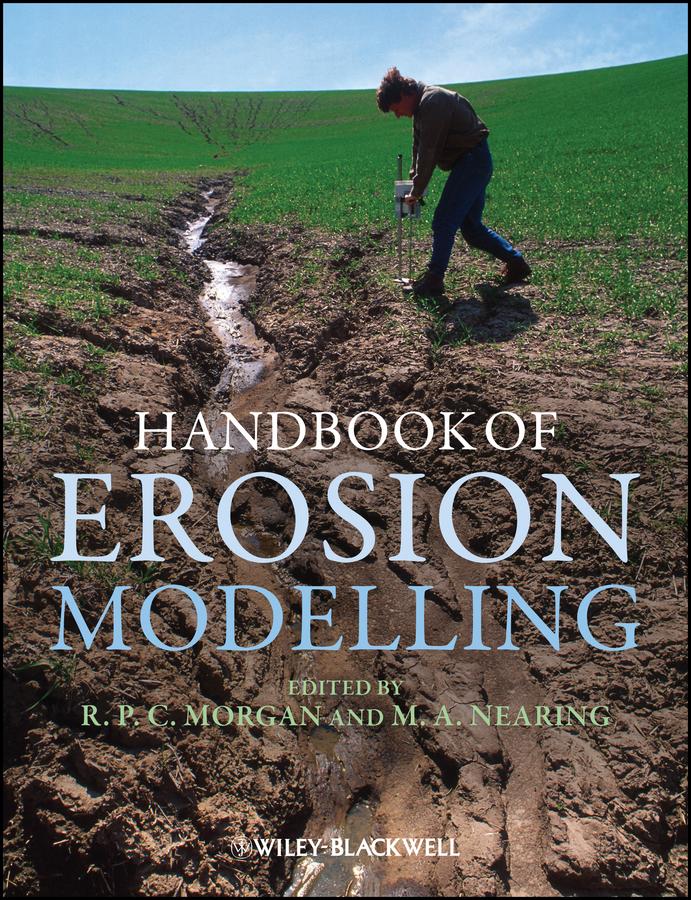
A study of erosion requires one to think in terms of microseconds to understand the mechanics of impact of a single raindrop on a soil surface, while landscapes form over periods of thousands of years. These processes operate on scales of millimetres for single raindrops to mega-metres for continents. Erosion modelling thus covers quite a lot of ground. This book introduces the conceptual and mathematical frameworks used to formulate models of soil erosion and uses case studies to show how models are applied to a variety of purposes at a range of spatial and temporal scales. The aim is to provide land managers and others with the tools required to select a model appropriate to the type and scale of erosion problem, to show what users can expect in terms of accuracy of model predictions and to provide an appreciation of both the advantages and limitations of models. Problems covered include those arising from agriculture, the construction industry, pollution and climatic change and range in scale from farms to small and large catchments. The book will also be useful to students and research scientists as an up-to-date review of the state-of-art of erosion modelling and, through a knowledge of how models are used in practice, in highlighting the gaps in knowledge that need to be filled in order to develop even better models.
Payez facilement par carte, Klarna, Apple Pay ou Google Pay. Pas satisfait ? Vous avez toujours une garantie de remboursement de 14 jours. En savoir plus dans nos conditions. Si vous avez des questions, envoyez-nous un e-mail à hello@memmo.org.
Memmo facilite tes études, où que tu sois dans le monde. On rassemble tes manuels de cours et des outils d'étude intelligents au même endroit : résumés, quiz, podcasts et flashcards. Et il y a Ted, ton compagnon d'étude qui répond à toutes tes questions. Plus de 50 000 étudiants étudient déjà ici – conçu pour t'aider à apprendre plus vite et à moins stresser.