
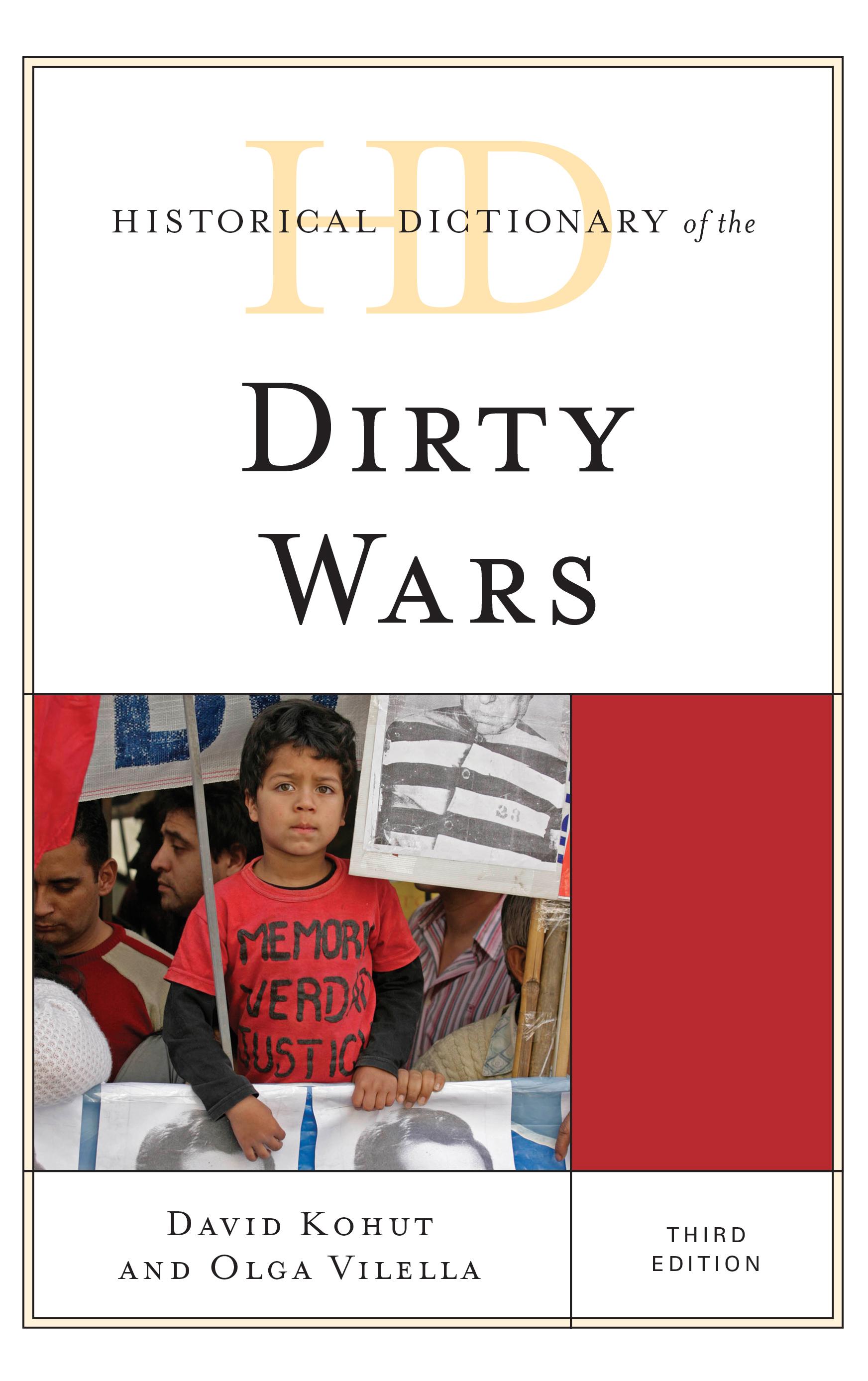
The Historical Dictionary of the Dirty Wars coversthe period 1954–1990 in South America, when authoritarian regimes waged war on subversion, both real and imagined. The term “dirty war” (guerra sucia), though originally associated with the military dictatorship in Argentina from 1976 to 1983, has since been applied to neighboring dictatorships in Paraguay (1954–1989), Brazil (1964–1985), Bolivia (1971–1981), Uruguay (1973–1985), and Chile (1973–1990). Although the concept is by no means peculiar to Latin America—the term has become a byword for state-sponsored repression anywhere in the world—these regimes were among its most notorious practitioners. In the mid-1970s they joined forces—along with Ecuador and Peru—to create Operation Condor, a top-secret network of military dictatorships that kidnapped, tortured, and disappeared one another’s political opponents. Their death squads operated both nationally and internationally, sometimes beyond the region.
This third edition of Historical Dictionary of the Dirty Wars contains a chronology, an introduction, appendixes, and an extensive bibliography. The dictionary section has over 400 cross-referenced entries on the countries themselves; guerrilla and political movements that provoked (though by no means exonerated) governmental reaction; leading guerrilla, human-rights, military, and political figures; local, regional, and international human-rights organizations; expressions of cultural resistance (art, film, literature, music, and theater); and artistic figures (filmmakers, novelists, and playwrights) whose works attempted to represent or resist the period of repression. This book is an excellent access point for students, researchers, and anyone wanting to know more about the dirty wars of South America
This third edition of Historical Dictionary of the Dirty Wars contains a chronology, an introduction, appendixes, and an extensive bibliography. The dictionary section has over 400 cross-referenced entries on the countries themselves; guerrilla and political movements that provoked (though by no means exonerated) governmental reaction; leading guerrilla, human-rights, military, and political figures; local, regional, and international human-rights organizations; expressions of cultural resistance (art, film, literature, music, and theater); and artistic figures (filmmakers, novelists, and playwrights) whose works attempted to represent or resist the period of repression. This book is an excellent access point for students, researchers, and anyone wanting to know more about the dirty wars of South America
Payez facilement par carte, Klarna, Apple Pay ou Google Pay. Pas satisfait ? Vous avez toujours une garantie de remboursement de 14 jours. En savoir plus dans nos conditions. Si vous avez des questions, envoyez-nous un e-mail à hello@memmo.org.
Memmo facilite tes études, où que tu sois dans le monde. On rassemble tes manuels de cours et des outils d'étude intelligents au même endroit : résumés, quiz, podcasts et flashcards. Et il y a Ted, ton compagnon d'étude qui répond à toutes tes questions. Plus de 50 000 étudiants étudient déjà ici – conçu pour t'aider à apprendre plus vite et à moins stresser.