
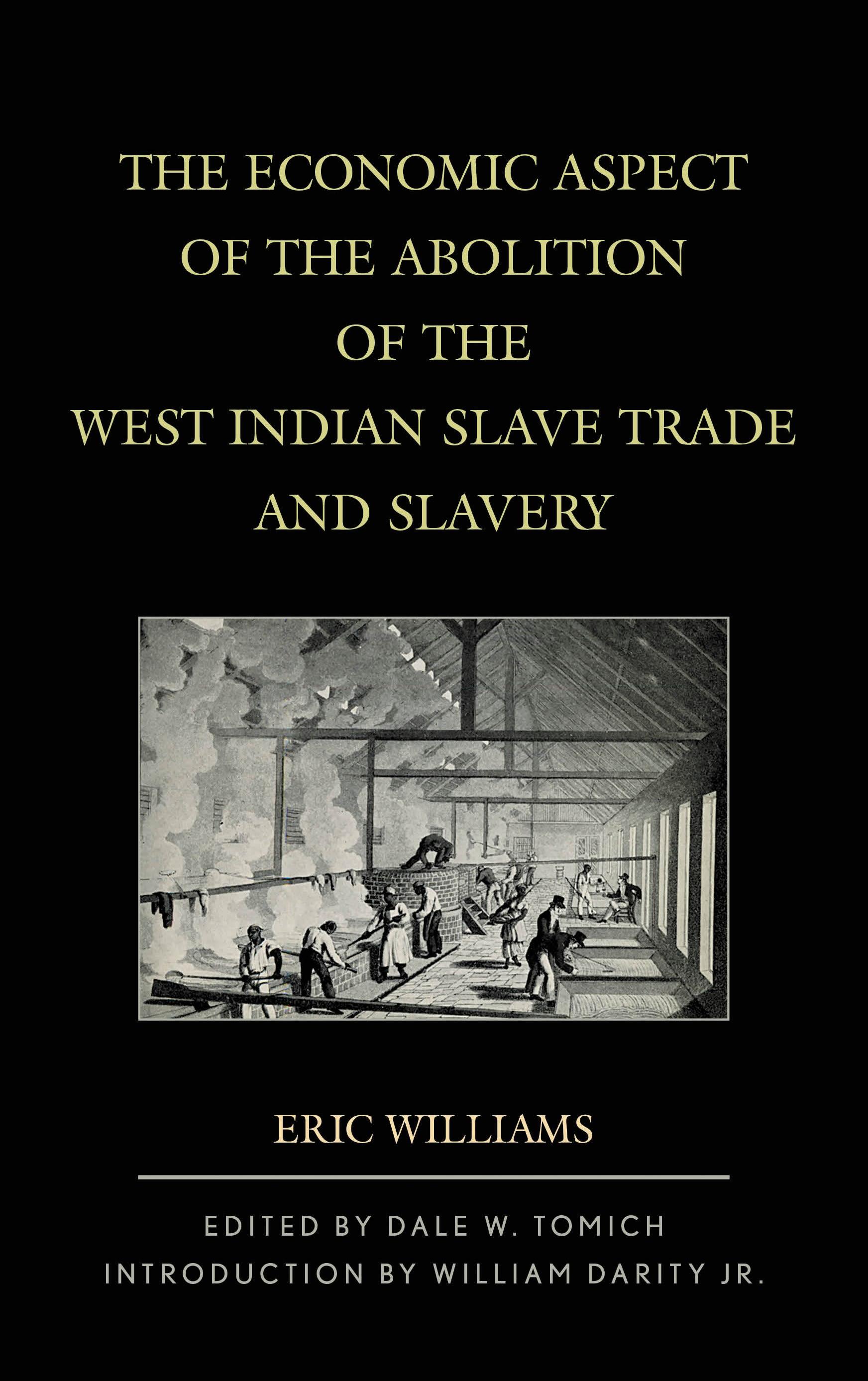
In his influential and widely debated Capitalism and Slavery, Eric Williams examined the relation of capitalism and slavery in the British West Indies. Binding an economic view of history with strong moral argument, his study of the role of slavery in financing the Industrial Revolution refuted traditional ideas of economic and moral progress and firmly established the centrality of the African slave trade in European economic development. He also showed that mature industrial capitalism in turn helped destroy the slave system. Establishing the exploitation of commercial capitalism and its link to racial attitudes, Williams employed a historicist vision that has set the tone for an entire field. Williams’s profound critique became the foundation for studies of imperialism and economic development and has been widely debated since the book’s initial publication in 1944. The Economic Aspect of the Abolition of the West Indian Slave Trade and Slavery now makes available in book form for the first time his dissertation, on which Capitalism and Slavery was based. The significant differences between his two works allow us to rethink questions that were considered resolved and to develop fresh problems and hypotheses. It offers the possibility of a much deeper reconsideration of issues that have lost none of their urgency—indeed, whose importance has increased.
Payez facilement par carte, Klarna, Apple Pay ou Google Pay. Pas satisfait ? Vous avez toujours une garantie de remboursement de 14 jours. En savoir plus dans nos conditions. Si vous avez des questions, envoyez-nous un e-mail à hello@memmo.org.
Memmo facilite tes études, où que tu sois dans le monde. On rassemble tes manuels de cours et des outils d'étude intelligents au même endroit : résumés, quiz, podcasts et flashcards. Et il y a Ted, ton compagnon d'étude qui répond à toutes tes questions. Plus de 50 000 étudiants étudient déjà ici – conçu pour t'aider à apprendre plus vite et à moins stresser.