
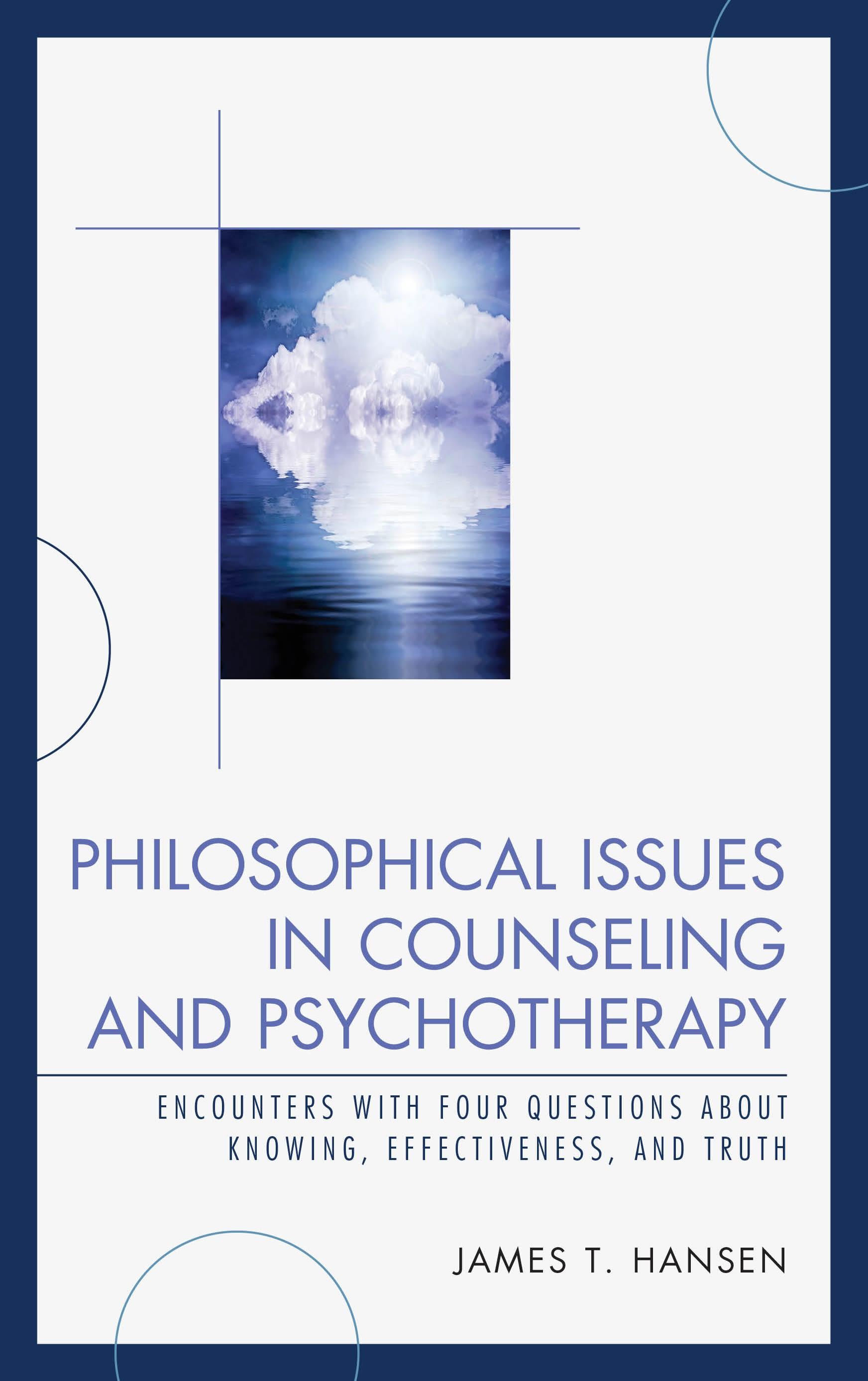
To become a counselor or psychotherapist, one must learn a confusing and conceptually disconnected array of theories, techniques, and ideologies. For instance, CBT, humanistic, and psychodynamic interventions have virtually opposite conceptual foundations, but they are all used to help clients. What principles, however, connect the various movements, trends, and methods of helping? In Philosophical Issues in Counseling and Psychotherapy: Encounters with Four Questions about Knowing, Effectiveness, and Truth, James T. Hansen asks and proposes beginning resolutions to four fundamental philosophical questions about knowing, effectiveness, and truth that are designed to unite and give meaning to diverse and seemingly contradictory models of helping: What does it mean to know a client? What makes counseling effective? Are truths discovered or created in the counseling relationship? Should counselors abandon the idea of truth? Although these questions are complex, Hansen provides plain language answers that make the material accessible to readers who have no formal education in philosophy. Furthermore, he addresses these questions in the context of his personal struggles to find meaning—making the book an engaging and highly enjoyable reading experience.
Payez facilement par carte, Klarna, Apple Pay ou Google Pay. Pas satisfait ? Vous avez toujours une garantie de remboursement de 14 jours. En savoir plus dans nos conditions. Si vous avez des questions, envoyez-nous un e-mail à hello@memmo.org.
Memmo facilite tes études, où que tu sois dans le monde. On rassemble tes manuels de cours et des outils d'étude intelligents au même endroit : résumés, quiz, podcasts et flashcards. Et il y a Ted, ton compagnon d'étude qui répond à toutes tes questions. Plus de 50 000 étudiants étudient déjà ici – conçu pour t'aider à apprendre plus vite et à moins stresser.