
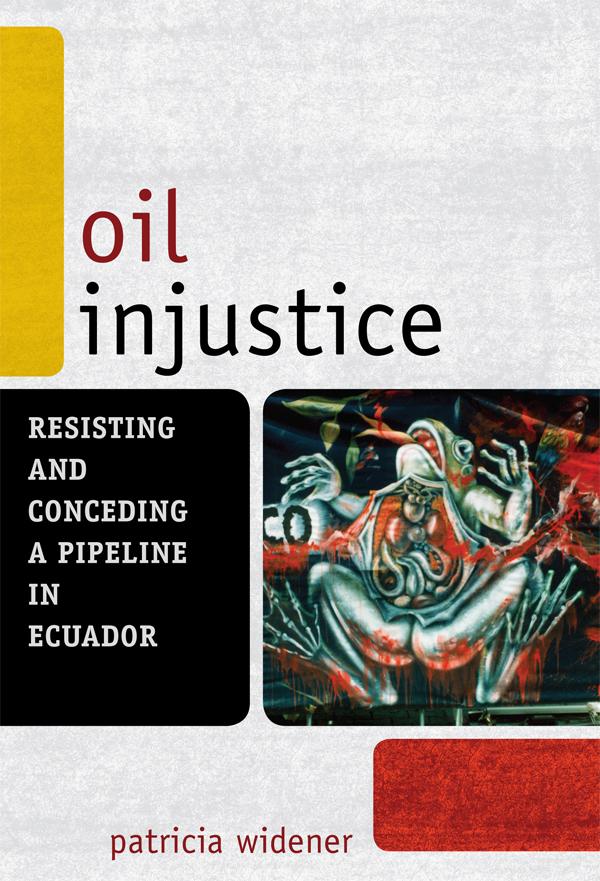
Oil Injustice examines the mobilization efforts of four communities with different oil histories in response to the construction of an oil pipeline. Using multiple sites in Ecuador as case studies, Patricia Widener examines the efforts of grassroots groups, non-governmental organizations, activist mayors, and transnational advocates that mobilized to redefine the country's oil path and to represent the voice of many local communities and organizations that sought to offer an alternative to the nation's oil dependency and to the use of its oil wealth. These groups generated divergent and at times rival reactions to the pipeline, though at their core, the multiple campaigns developed from a shared history and awareness of a number of marginalized communities and degraded environments in areas most important to the oil process. Widener shows that global environmental justice demands are bound within a capitalist political system, where community activists, national NGOs and their international allies are forced to seek local change rather than attempt to defeat a disabling and unequal system.
Payez facilement par carte, Klarna, Apple Pay ou Google Pay. Pas satisfait ? Vous avez toujours une garantie de remboursement de 14 jours. En savoir plus dans nos conditions. Si vous avez des questions, envoyez-nous un e-mail à hello@memmo.org.
Memmo facilite tes études, où que tu sois dans le monde. On rassemble tes manuels de cours et des outils d'étude intelligents au même endroit : résumés, quiz, podcasts et flashcards. Et il y a Ted, ton compagnon d'étude qui répond à toutes tes questions. Plus de 50 000 étudiants étudient déjà ici – conçu pour t'aider à apprendre plus vite et à moins stresser.