
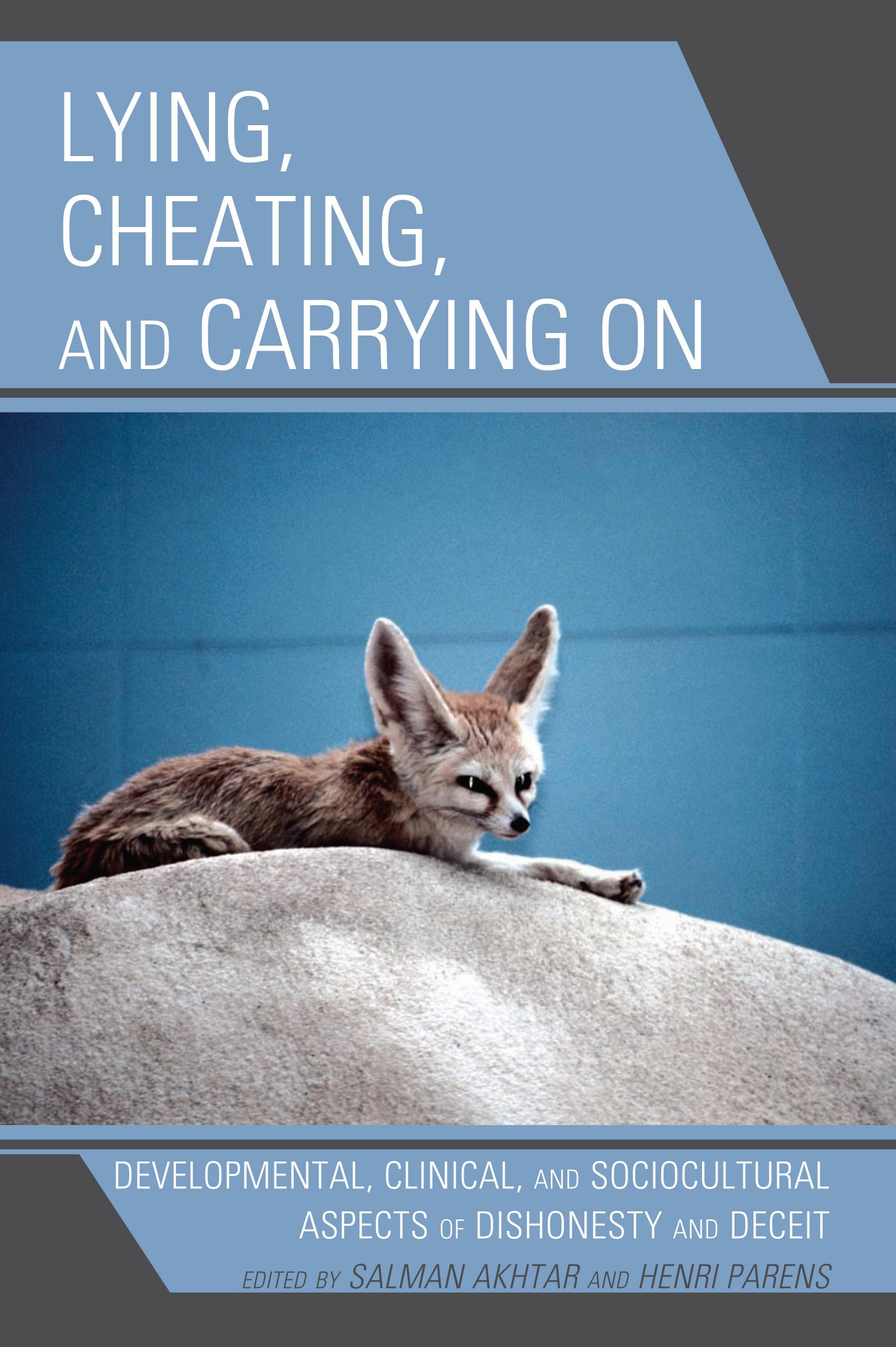
What constitutes a lie? What are the different types of lies? Why do people lie? Is dishonesty ubiquitous in human experience? And what should be done with individuals who seek pschotherapeutic help and yet can not reveal important aspects of their lives and even fabricate histories, associations, and dreams? Such questions form the backbone of this exceptional book. Starting with the emergence of the capacity to lie in childhood and the formative influence of the family in children's moral development, the discourse goes on to include the variety of adulthood lies, including social lies, existential lies, pathological lies, narcissistic lies, and sociopathic lies. Contributions from distinguished psychoanalysts like Salman Akhtar, Harold Blum, Ruth Fischer, Lucy LaFarge, Henri Parens, and Michael Stone, along with others, explore the impact of dishonesty on the internal and external realities of an individual. Malignant forms of lies involving serious character pathology and criminality, as well as their detection, are also discussed. The book's aim is to help therapists enhance their empathy with patients who are compelled to lie and to provide them with better therapeutic strategies to deal with the clinical dilemmas that arise in working with such children and adults.
Payez facilement par carte, Klarna, Apple Pay ou Google Pay. Pas satisfait ? Vous avez toujours une garantie de remboursement de 14 jours. En savoir plus dans nos conditions. Si vous avez des questions, envoyez-nous un e-mail à hello@memmo.org.
Memmo facilite tes études, où que tu sois dans le monde. On rassemble tes manuels de cours et des outils d'étude intelligents au même endroit : résumés, quiz, podcasts et flashcards. Et il y a Ted, ton compagnon d'étude qui répond à toutes tes questions. Plus de 50 000 étudiants étudient déjà ici – conçu pour t'aider à apprendre plus vite et à moins stresser.