
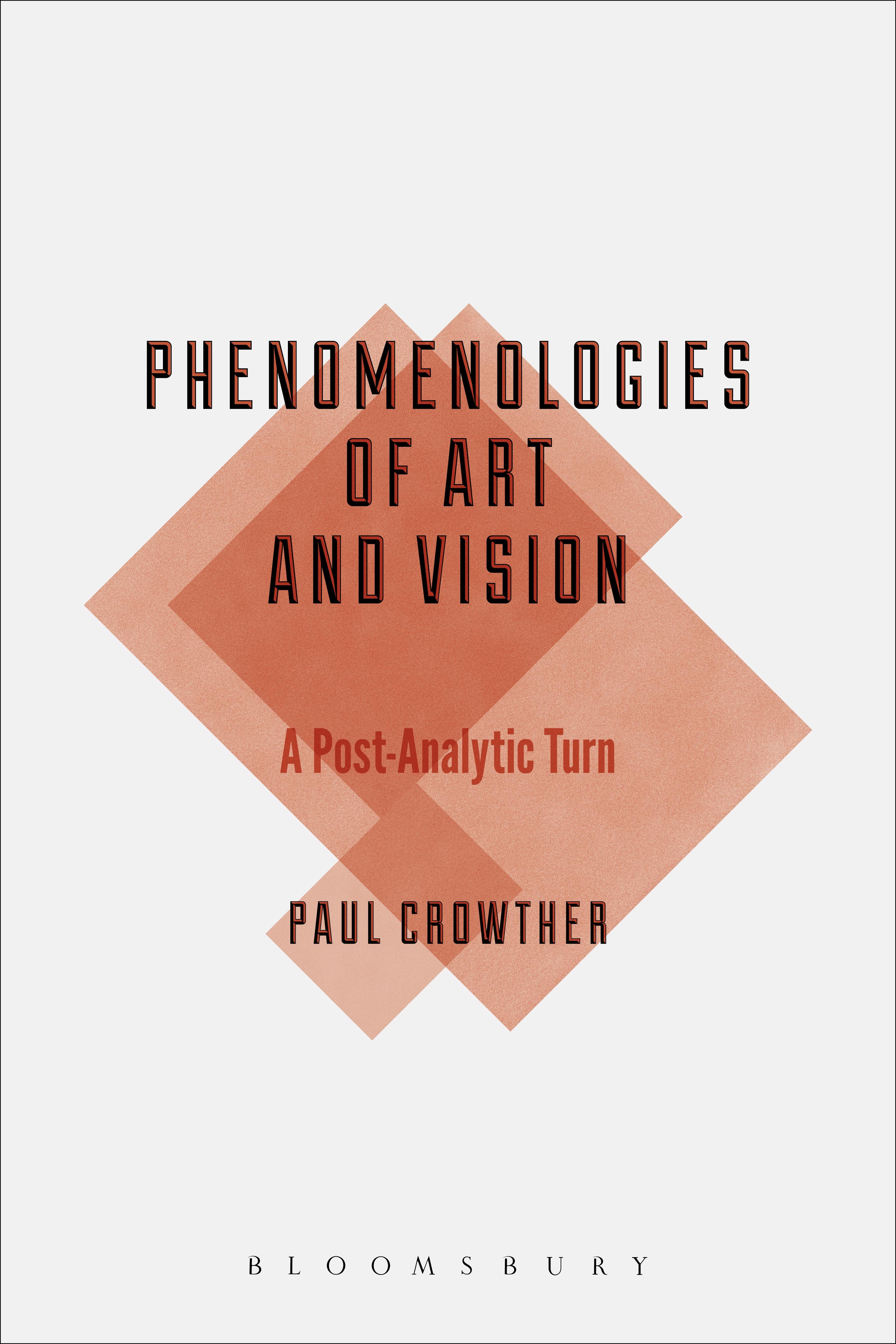
Contemporary
discussions of the image like to emphasize art's societal functions. Few
studies come close to answering why pictures and sculptures fascinate and
intrigue regardless of any practical functions they might serve. In this
original, thought-provoking study, Paul Crowther reveals the intrinsic
significance of pictures and sculptures.
To address the
question of how painting becomes an art, Crowther uses the analytic philosophy
of Richard Wollheim as a starting point. But to sufficiently answer the
question, he makes an important link to a tradition much more successful in
giving voice to the deeper ontology of visual art - existential phenomenology.
The result is a work that demonstrates the
reciprocal relationship between phenomenology and analytic aesthetics. To
expand its ontological scope and solve the problem of expression, analytic aesthetics
needs phenomenology; while to develop a sustained, critically balanced, and
intellectually available ontology, phenomenology needs the discursive force and
lucidity of analytic philosophy. This convincing case for a post-analytic
phenomenology of art is an important advancement of contemporary discussions of
the philosophy of art.
discussions of the image like to emphasize art's societal functions. Few
studies come close to answering why pictures and sculptures fascinate and
intrigue regardless of any practical functions they might serve. In this
original, thought-provoking study, Paul Crowther reveals the intrinsic
significance of pictures and sculptures.
To address the
question of how painting becomes an art, Crowther uses the analytic philosophy
of Richard Wollheim as a starting point. But to sufficiently answer the
question, he makes an important link to a tradition much more successful in
giving voice to the deeper ontology of visual art - existential phenomenology.
The result is a work that demonstrates the
reciprocal relationship between phenomenology and analytic aesthetics. To
expand its ontological scope and solve the problem of expression, analytic aesthetics
needs phenomenology; while to develop a sustained, critically balanced, and
intellectually available ontology, phenomenology needs the discursive force and
lucidity of analytic philosophy. This convincing case for a post-analytic
phenomenology of art is an important advancement of contemporary discussions of
the philosophy of art.
Payez facilement par carte, Klarna, Apple Pay ou Google Pay. Pas satisfait ? Vous avez toujours une garantie de remboursement de 14 jours. En savoir plus dans nos conditions. Si vous avez des questions, envoyez-nous un e-mail à hello@memmo.org.
Memmo facilite tes études, où que tu sois dans le monde. On rassemble tes manuels de cours et des outils d'étude intelligents au même endroit : résumés, quiz, podcasts et flashcards. Et il y a Ted, ton compagnon d'étude qui répond à toutes tes questions. Plus de 50 000 étudiants étudient déjà ici – conçu pour t'aider à apprendre plus vite et à moins stresser.