
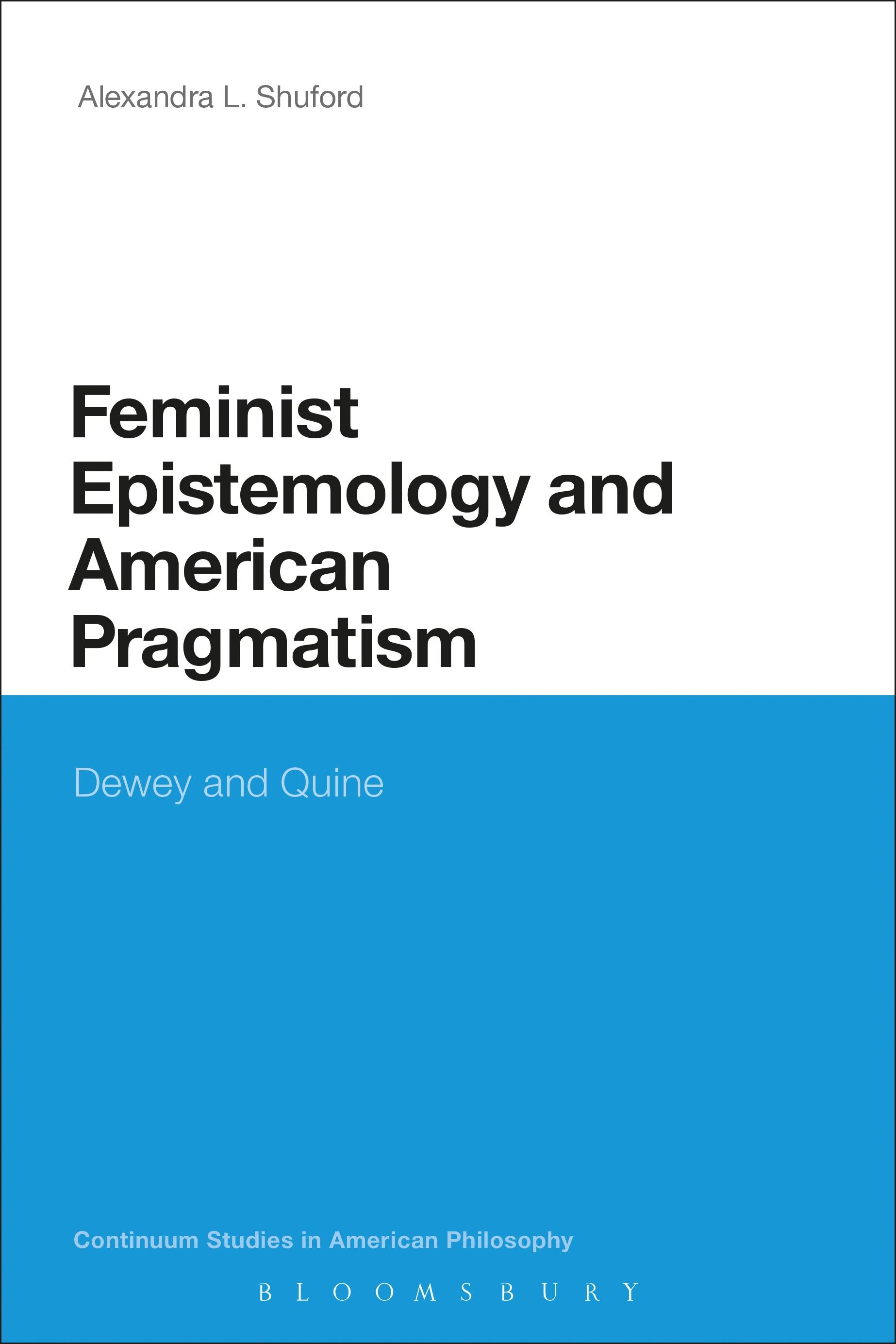
Feminist philosophy identifies tensions within mainstream theories of knowledge. To create a more egalitarian epistemology, solutions to these problems have been as diverse as the traditions of philosophy out of which feminists continue to emerge.
This book considers two equally formidable approaches theorized by Louise Antony and Lynn Hankinson Nelson.
The American philosopher W.V.O. Quine locates knowledge as a branch of empirical science. Shuford shows how both Antony and Nelson use Quine's 'naturalized epistemology' to create empirically robust feminist epistemologies. However, Shuford argues that neither can include physical embodiment as an important epistemic variable. The book argues that John Dewey's theory of inquiry extends beyond Quine's insight that knowledge must be interrogated as an empirical matter. Because Dewey insists that all aspects of experience must be subject to the experimental openness that is the hallmark of scientific reasoning, Shuford concludes that physical embodiment must play an important part in knowledge claims.
This book considers two equally formidable approaches theorized by Louise Antony and Lynn Hankinson Nelson.
The American philosopher W.V.O. Quine locates knowledge as a branch of empirical science. Shuford shows how both Antony and Nelson use Quine's 'naturalized epistemology' to create empirically robust feminist epistemologies. However, Shuford argues that neither can include physical embodiment as an important epistemic variable. The book argues that John Dewey's theory of inquiry extends beyond Quine's insight that knowledge must be interrogated as an empirical matter. Because Dewey insists that all aspects of experience must be subject to the experimental openness that is the hallmark of scientific reasoning, Shuford concludes that physical embodiment must play an important part in knowledge claims.
Payez facilement par carte, Klarna, Apple Pay ou Google Pay. Pas satisfait ? Vous avez toujours une garantie de remboursement de 14 jours. En savoir plus dans nos conditions. Si vous avez des questions, envoyez-nous un e-mail à hello@memmo.org.
Memmo facilite tes études, où que tu sois dans le monde. On rassemble tes manuels de cours et des outils d'étude intelligents au même endroit : résumés, quiz, podcasts et flashcards. Et il y a Ted, ton compagnon d'étude qui répond à toutes tes questions. Plus de 50 000 étudiants étudient déjà ici – conçu pour t'aider à apprendre plus vite et à moins stresser.