
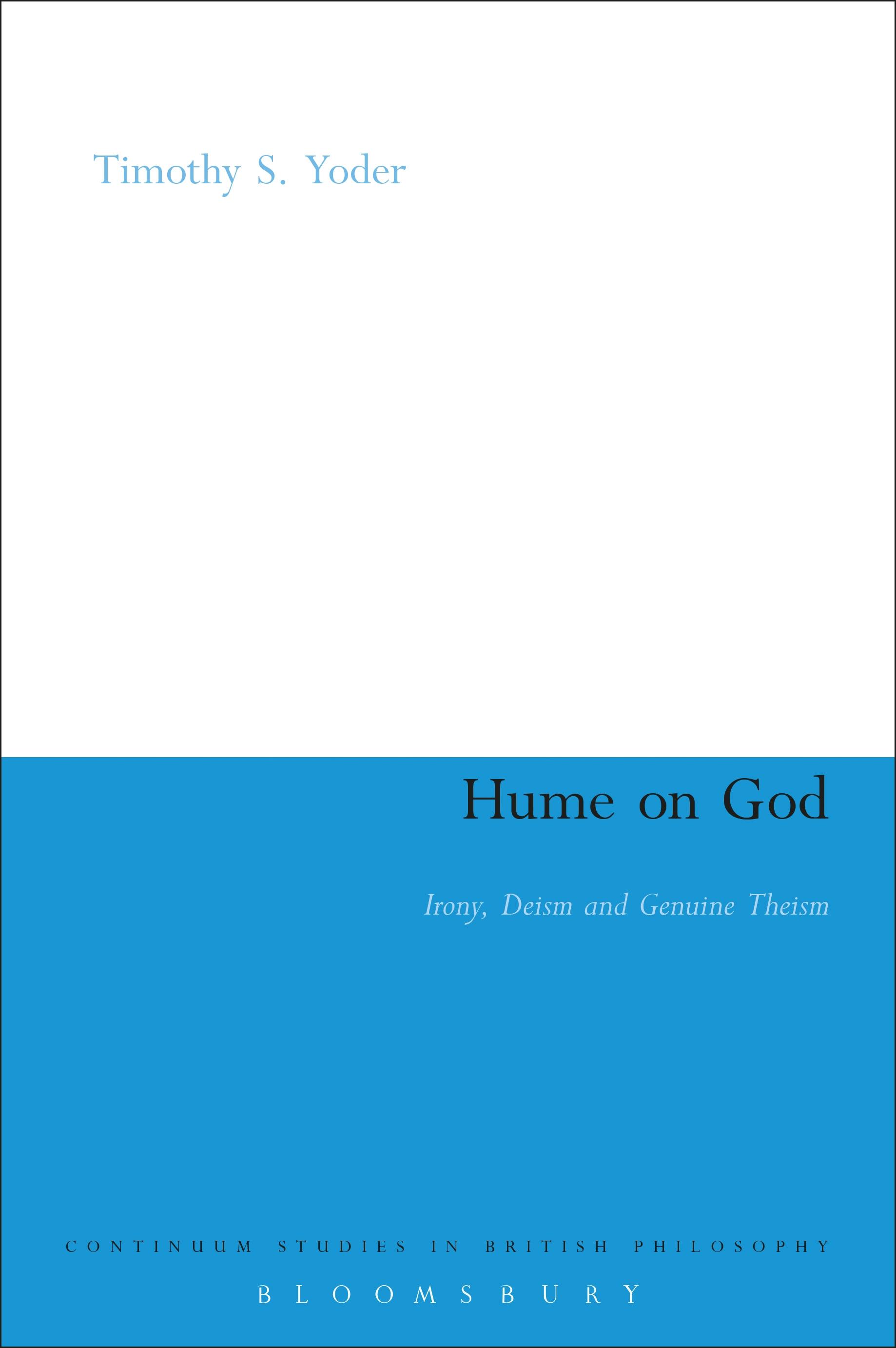
David Hume, one of the most influential philosophers to have written in the English language, is widely known as a skeptic and an empiricist. He is famous for raising questions about the existence of things for which there is insufficient empirical evidence, such as souls, the self, miracles, and, perhaps most importantly, God.
Despite this reputation, however, Hume's works contain frequent references to a deity, and one searches in vain to find a positive assertion of atheism. This book proposes a different reading of Hume on God, in which Hume is seen as proposing a 'genuine theism'. Yoder investigates Hume's use of irony and his relationship with the Deists of his era and offers a thorough re-examination of Hume's writings on religion. Yoder concludes that, despite Hume's criticisms of the church, religiously-based ethics and the belief in miracles, he stops well short of a rejection of the existence of God. Always a creative thinker, Hume carves out a unique conception of the divine being.
Payez facilement par carte, Klarna, Apple Pay ou Google Pay. Pas satisfait ? Vous avez toujours une garantie de remboursement de 14 jours. En savoir plus dans nos conditions. Si vous avez des questions, envoyez-nous un e-mail à hello@memmo.org.
Memmo facilite tes études, où que tu sois dans le monde. On rassemble tes manuels de cours et des outils d'étude intelligents au même endroit : résumés, quiz, podcasts et flashcards. Et il y a Ted, ton compagnon d'étude qui répond à toutes tes questions. Plus de 50 000 étudiants étudient déjà ici – conçu pour t'aider à apprendre plus vite et à moins stresser.