
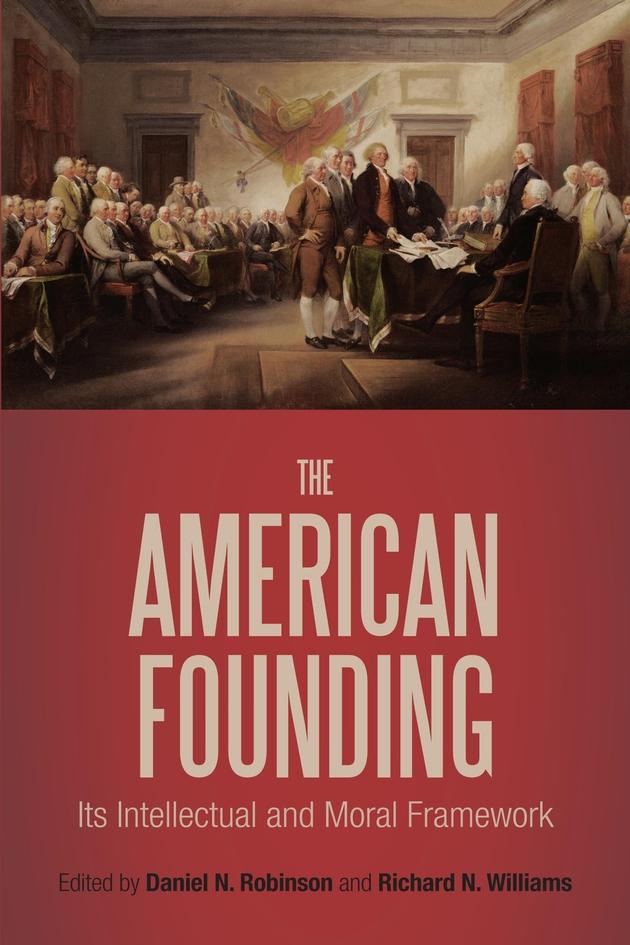
America's Founding Fathers shared similar beliefs on the nature of civic life and the character of those supposed to be able to self-govern. Although they studied the failed republics of the ancient world, they believed that classical ideals were still applicable to politics.
This unique contribution to the literature on American Founding gathers leading thinkers who set out not to relate its history, but its intellectual underpinnings. They explore the Founding Fathers' assumptions about civic life, human nature, political institutions, private morality, aesthetics, education, and history. Chapters on natural law, the Judeo-Christian conception of human nature, the influence of Aristotle and Cicero, the symbolic role of architecture, and the importance of education help understand the foundations that led to the Declaration of Independence and a constitutional charter that aimed to be universal in its human aspirations.
This authoritative work provides a conservative response to more liberal interpretations of America. It will enrich the debate on civic life and be a key resource to anyone interested in America's "experiment in ordered liberty."
This unique contribution to the literature on American Founding gathers leading thinkers who set out not to relate its history, but its intellectual underpinnings. They explore the Founding Fathers' assumptions about civic life, human nature, political institutions, private morality, aesthetics, education, and history. Chapters on natural law, the Judeo-Christian conception of human nature, the influence of Aristotle and Cicero, the symbolic role of architecture, and the importance of education help understand the foundations that led to the Declaration of Independence and a constitutional charter that aimed to be universal in its human aspirations.
This authoritative work provides a conservative response to more liberal interpretations of America. It will enrich the debate on civic life and be a key resource to anyone interested in America's "experiment in ordered liberty."
Payez facilement par carte, Klarna, Apple Pay ou Google Pay. Pas satisfait ? Vous avez toujours une garantie de remboursement de 14 jours. En savoir plus dans nos conditions. Si vous avez des questions, envoyez-nous un e-mail à hello@memmo.org.
Memmo facilite tes études, où que tu sois dans le monde. On rassemble tes manuels de cours et des outils d'étude intelligents au même endroit : résumés, quiz, podcasts et flashcards. Et il y a Ted, ton compagnon d'étude qui répond à toutes tes questions. Plus de 50 000 étudiants étudient déjà ici – conçu pour t'aider à apprendre plus vite et à moins stresser.