
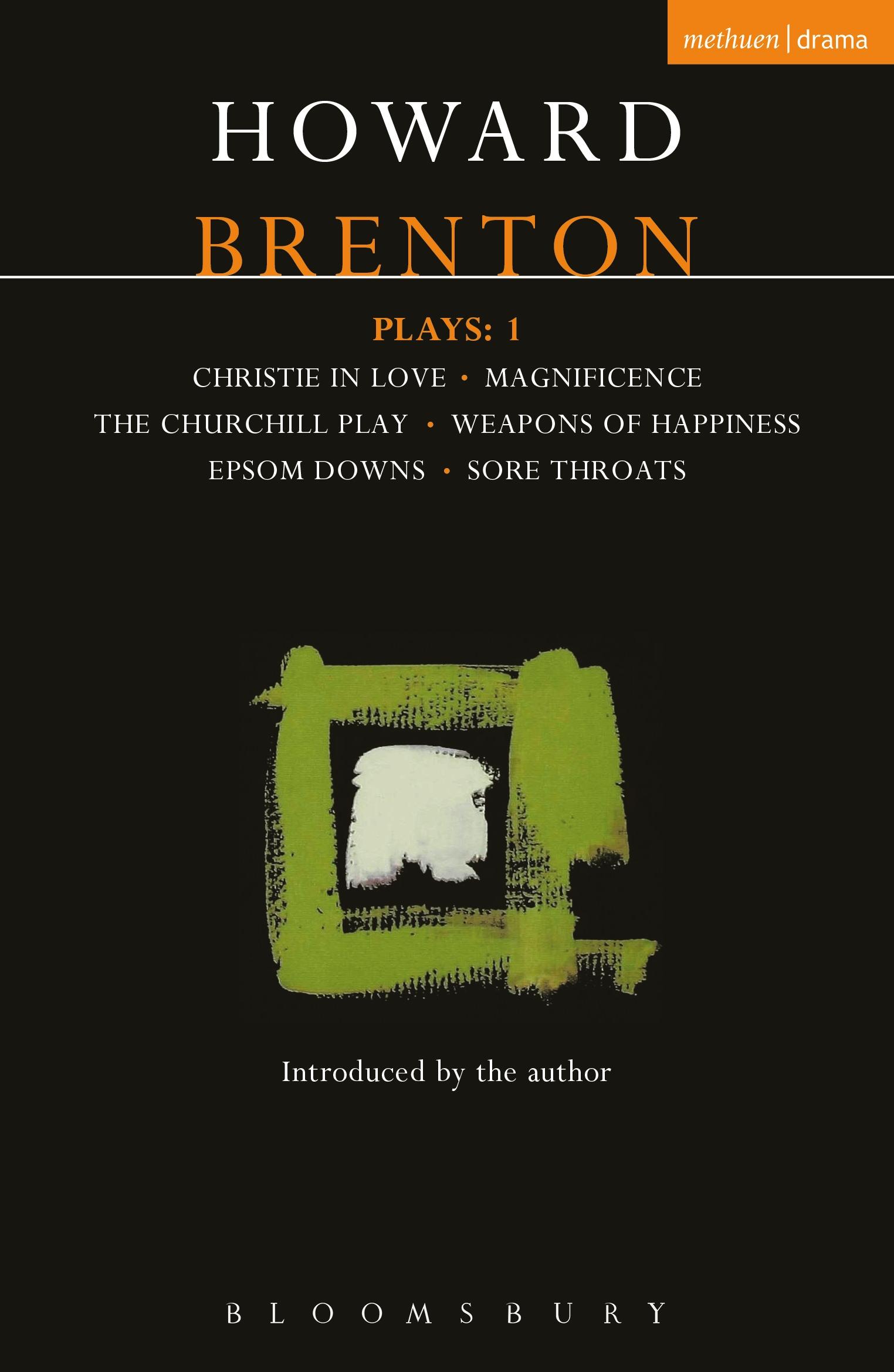
Howard Brenton is one of Britain's best-known and most controversial dramatists
Christie in Love is based on the story of John Christie, the 19th century serial killer, "like Genet, [Brenton] feels for the outcast...But he's less sentimentally involved with his criminals, clearer about his ultimate strategy to show the unreality of straight lines in a curved universe, of the roles society forces on us." (Observer). "Doing our 'umble best, Ma'am to wreck society", Magificence puts the small people and their protests against the bourgeois state on stage; it was described as "A wonderful piece of theatre; annexing whole new chunks of modern life and presenting them in a style at once fruitful and magnified." (The Times)
In The Churchill Play, Brenton brings Churchill back to life to view the future that he invented for England and "Brenton finds a way of making us look again at the past which has shaped the future into which he sees us drifting" (New Society). Weapons of Happiness is "a vision of revolution which is quite extraordinary in its creative ambiguity, its richness, its power to stimulate, to threaten and to inspire" (Sunday Times) while Epsom Downs "echoes Bartholomew Fair: a great public festival, held on common land and pulling in punters of every degree...a teaming, Bruegel-like composition" (The Times) The last play in this collection Sore Throats, is a witty and harsh examination of sexual proclivities from within and outside marriage: "No recent play compares for theatrical power and painful bravado." (Observer)
Christie in Love is based on the story of John Christie, the 19th century serial killer, "like Genet, [Brenton] feels for the outcast...But he's less sentimentally involved with his criminals, clearer about his ultimate strategy to show the unreality of straight lines in a curved universe, of the roles society forces on us." (Observer). "Doing our 'umble best, Ma'am to wreck society", Magificence puts the small people and their protests against the bourgeois state on stage; it was described as "A wonderful piece of theatre; annexing whole new chunks of modern life and presenting them in a style at once fruitful and magnified." (The Times)
In The Churchill Play, Brenton brings Churchill back to life to view the future that he invented for England and "Brenton finds a way of making us look again at the past which has shaped the future into which he sees us drifting" (New Society). Weapons of Happiness is "a vision of revolution which is quite extraordinary in its creative ambiguity, its richness, its power to stimulate, to threaten and to inspire" (Sunday Times) while Epsom Downs "echoes Bartholomew Fair: a great public festival, held on common land and pulling in punters of every degree...a teaming, Bruegel-like composition" (The Times) The last play in this collection Sore Throats, is a witty and harsh examination of sexual proclivities from within and outside marriage: "No recent play compares for theatrical power and painful bravado." (Observer)
Payez facilement par carte, Klarna, Apple Pay ou Google Pay. Pas satisfait ? Vous avez toujours une garantie de remboursement de 14 jours. En savoir plus dans nos conditions. Si vous avez des questions, envoyez-nous un e-mail à hello@memmo.org.
Memmo facilite tes études, où que tu sois dans le monde. On rassemble tes manuels de cours et des outils d'étude intelligents au même endroit : résumés, quiz, podcasts et flashcards. Et il y a Ted, ton compagnon d'étude qui répond à toutes tes questions. Plus de 50 000 étudiants étudient déjà ici – conçu pour t'aider à apprendre plus vite et à moins stresser.