
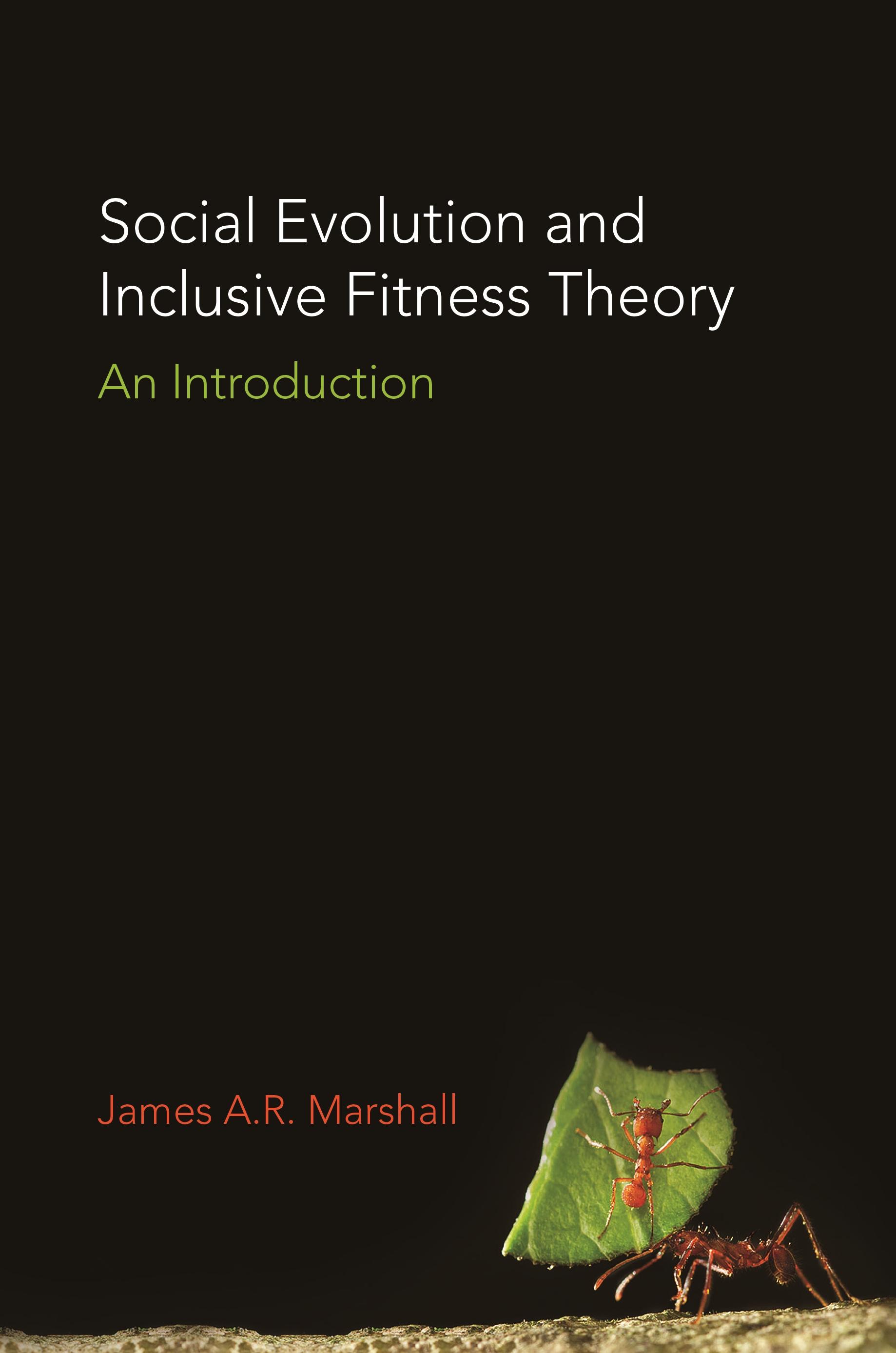
Social behavior has long puzzled evolutionary biologists, since the classical theory of natural selection maintains that individuals should not sacrifice their own fitness to affect that of others. Social Evolution and Inclusive Fitness Theory argues that a theory first presented in 1963 by William D. Hamilton—inclusive fitness theory—provides the most fundamental and general explanation for the evolution and maintenance of social behavior in the natural world.
James Marshall guides readers through the vast and confusing literature on the evolution of social behavior, introducing and explaining the competing theories that claim to provide answers to questions such as why animals evolve to behave altruistically. Using simple statistical language and techniques that practicing biologists will be familiar with, he provides a comprehensive yet easily understandable treatment of key concepts and their repeated misinterpretations. Particular attention is paid to how more realistic features of behavior, such as nonadditivity and conditionality, can complicate analysis. Marshall highlights the general problem of identifying the underlying causes of evolutionary change, and proposes fruitful approaches to doing so in the study of social evolution.
Social Evolution and Inclusive Fitness Theory describes how inclusive fitness theory addresses both simple and complex social scenarios, the controversies surrounding the theory, and how experimental work supports the theory as the most powerful explanation for social behavior and its evolution.
Payez facilement par carte, Klarna, Apple Pay ou Google Pay. Pas satisfait ? Vous avez toujours une garantie de remboursement de 14 jours. En savoir plus dans nos conditions. Si vous avez des questions, envoyez-nous un e-mail à hello@memmo.org.
Memmo facilite tes études, où que tu sois dans le monde. On rassemble tes manuels de cours et des outils d'étude intelligents au même endroit : résumés, quiz, podcasts et flashcards. Et il y a Ted, ton compagnon d'étude qui répond à toutes tes questions. Plus de 50 000 étudiants étudient déjà ici – conçu pour t'aider à apprendre plus vite et à moins stresser.