
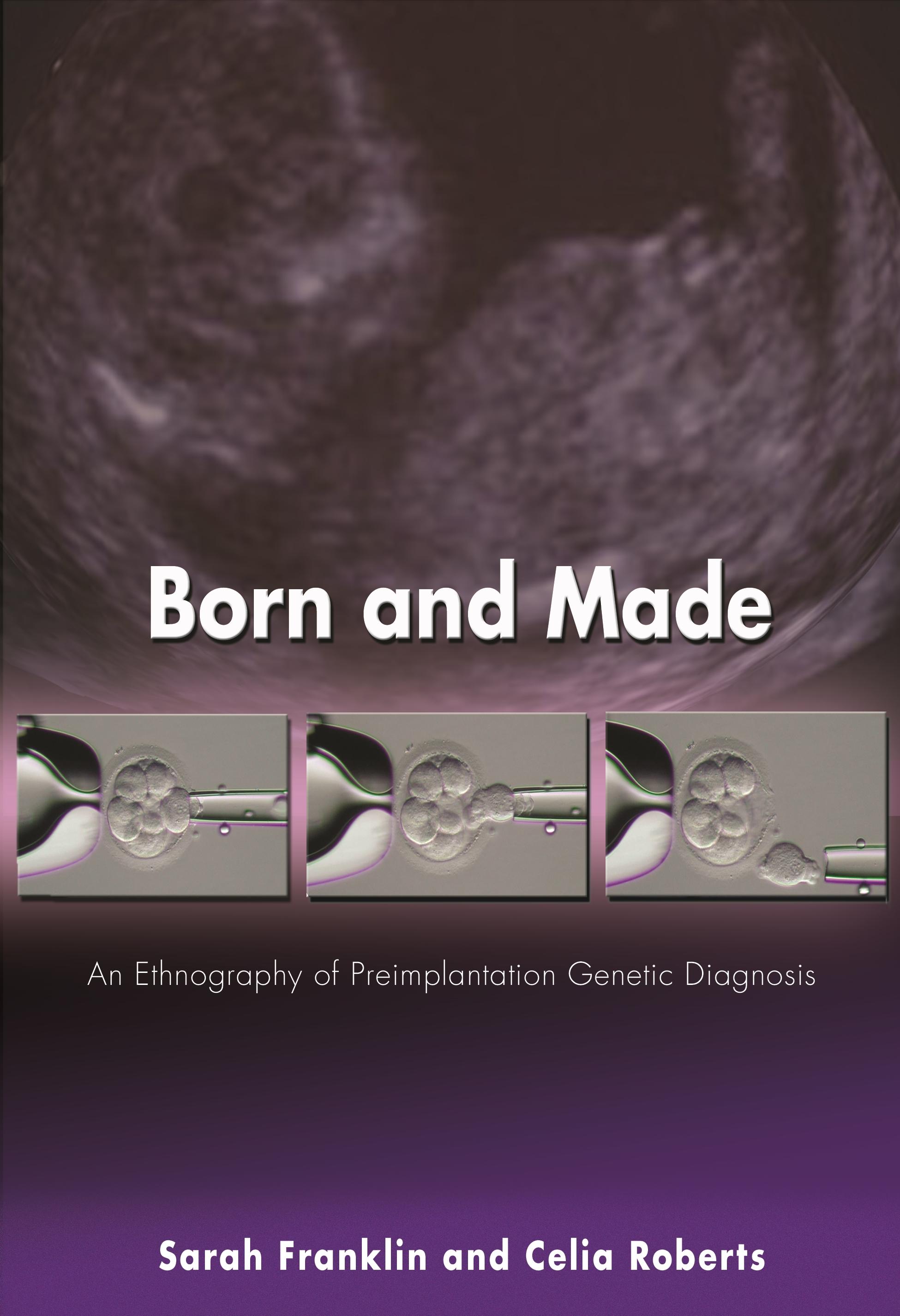
Are new reproductive and genetic technologies racing ahead of a society that is unable to establish limits to their use? Have the "new genetics" outpaced our ability to control their future applications? This book examines the case of preimplantation genetic diagnosis (PGD), the procedure used to prevent serious genetic disease by embryo selection, and the so-called "designer baby" method. Using detailed empirical evidence, the authors show that far from being a runaway technology, the regulation of PGD over the past fifteen years provides an example of precaution and restraint, as well as continual adaptation to changing social circumstances. Through interviews, media and policy analysis, and participant observation at two PGD centers in the United Kingdom, Born and Made provides an in-depth sociological examination of the competing moral obligations that define the experience of PGD.
Among the many novel findings of this pathbreaking ethnography of reproductive biomedicine is the prominence of uncertainty and ambivalence among PGD patients and professionals--a finding characteristic of the emerging "biosociety," in which scientific progress is inherently paradoxical and contradictory. In contrast to much of the speculative futurology that defines this field, Born and Made provides a timely and revealing case study of the on-the-ground decision-making that shapes technological assistance to human heredity.
Payez facilement par carte, Klarna, Apple Pay ou Google Pay. Pas satisfait ? Vous avez toujours une garantie de remboursement de 14 jours. En savoir plus dans nos conditions. Si vous avez des questions, envoyez-nous un e-mail à hello@memmo.org.
Memmo facilite tes études, où que tu sois dans le monde. On rassemble tes manuels de cours et des outils d'étude intelligents au même endroit : résumés, quiz, podcasts et flashcards. Et il y a Ted, ton compagnon d'étude qui répond à toutes tes questions. Plus de 50 000 étudiants étudient déjà ici – conçu pour t'aider à apprendre plus vite et à moins stresser.