
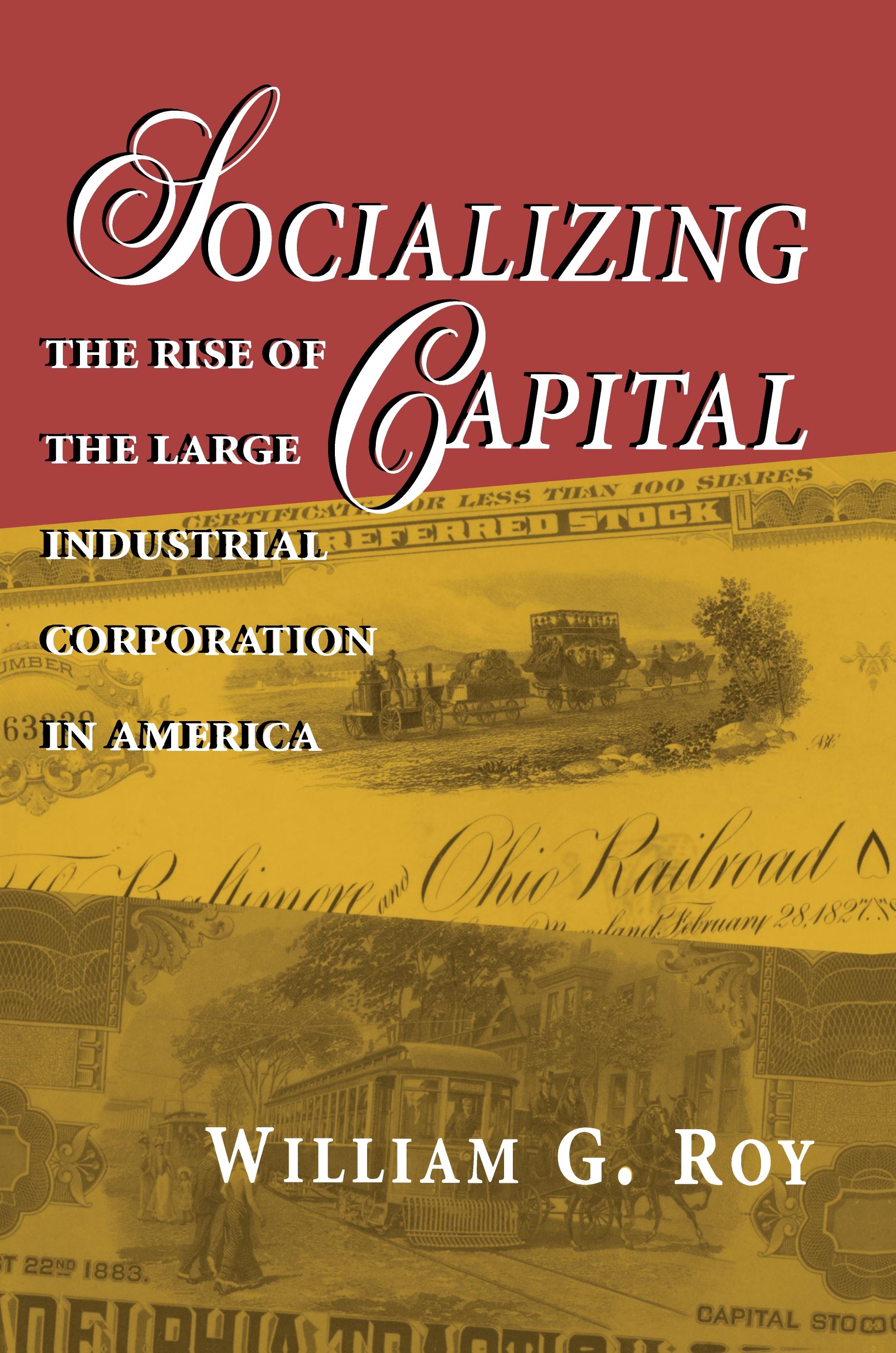
Ever since Adolph Berle and Gardiner Means wrote their classic 1932 analysis of the American corporation, The Modern Corporation and Private Property, social scientists have been intrigued and challenged by the evolution of this crucial part of American social and economic life. Here William Roy conducts a historical inquiry into the rise of the large publicly traded American corporation. Departing from the received wisdom, which sees the big, vertically integrated corporation as the result of technological development and market growth that required greater efficiency in larger scale firms, Roy focuses on political, social, and institutional processes governed by the dynamics of power.
The author shows how the corporation started as a quasi-public device used by governments to create and administer public services like turnpikes and canals and then how it germinated within a system of stock markets, brokerage houses, and investment banks into a mechanism for the organization of railroads. Finally, and most particularly, he analyzes its flowering into the realm of manufacturing, when at the turn of this century, many of the same giants that still dominate the American economic landscape were created. Thus, the corporation altered manufacturing entities so that they were each owned by many people instead of by single individuals as had previously been the case.
Payez facilement par carte, Klarna, Apple Pay ou Google Pay. Pas satisfait ? Vous avez toujours une garantie de remboursement de 14 jours. En savoir plus dans nos conditions. Si vous avez des questions, envoyez-nous un e-mail à hello@memmo.org.
Memmo facilite tes études, où que tu sois dans le monde. On rassemble tes manuels de cours et des outils d'étude intelligents au même endroit : résumés, quiz, podcasts et flashcards. Et il y a Ted, ton compagnon d'étude qui répond à toutes tes questions. Plus de 50 000 étudiants étudient déjà ici – conçu pour t'aider à apprendre plus vite et à moins stresser.