
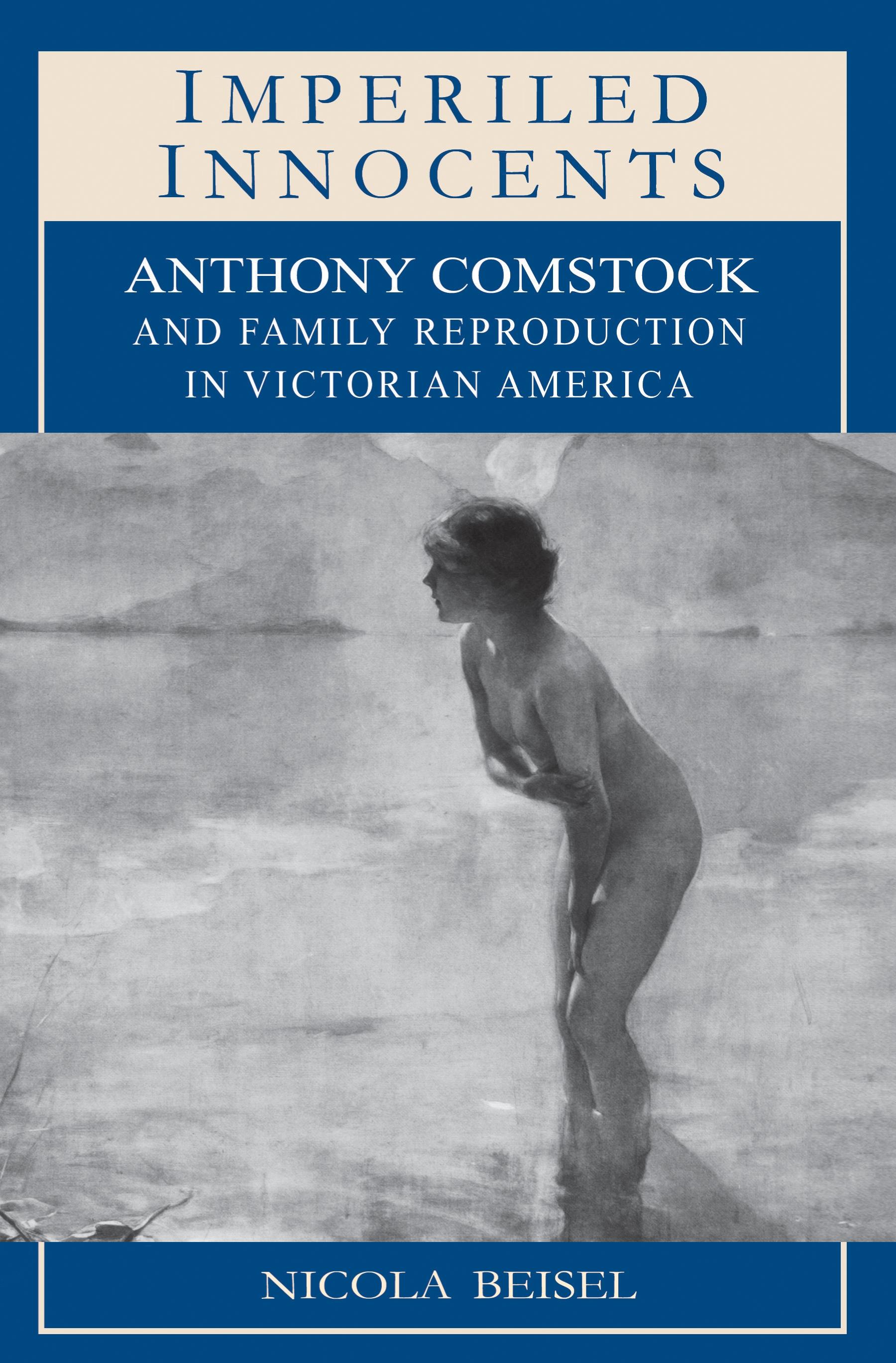
Moral reform movements claiming to protect children began to emerge in the United States over a century ago, most notably when Anthony Comstock and his supporters crusaded to restrict the circulation of contraception, information on the sexual rights of women, and "obscene" art and literature. Much of their rhetoric influences debates on issues surrounding children and sexuality today. Drawing on Victorian accounts of pregnant girls, prostitutes, Free Lovers, and others deemed "immoral," Nicola Beisel argues that rhetoric about the moral corruption of children speaks to an ongoing parental concern: that children will fail to replicate or exceed their parents' social position. The rhetoric of morality, she maintains, is more than symbolic and goes beyond efforts to control mass behavior. For the Victorians, it tapped into the fear that their own children could fall prey to vice and ultimately live in disgrace.
In a rare analysis of Anthony Comstock's crusade with the New York and New England Societies for the Suppression of Vice, Beisel examines how the reformer worked on the anxieties of the upper classes. One tactic was to link moral corruption with the flood of immigrants, which succeeded in New York and Boston, where minorities posed a political threat to the upper classes. Showing how a moral crusade can bring a society's diffuse anxieties to focus on specific sources, Beisel offers a fresh theoretical approach to moral reform movements.
Payez facilement par carte, Klarna, Apple Pay ou Google Pay. Pas satisfait ? Vous avez toujours une garantie de remboursement de 14 jours. En savoir plus dans nos conditions. Si vous avez des questions, envoyez-nous un e-mail à hello@memmo.org.
Memmo facilite tes études, où que tu sois dans le monde. On rassemble tes manuels de cours et des outils d'étude intelligents au même endroit : résumés, quiz, podcasts et flashcards. Et il y a Ted, ton compagnon d'étude qui répond à toutes tes questions. Plus de 50 000 étudiants étudient déjà ici – conçu pour t'aider à apprendre plus vite et à moins stresser.