
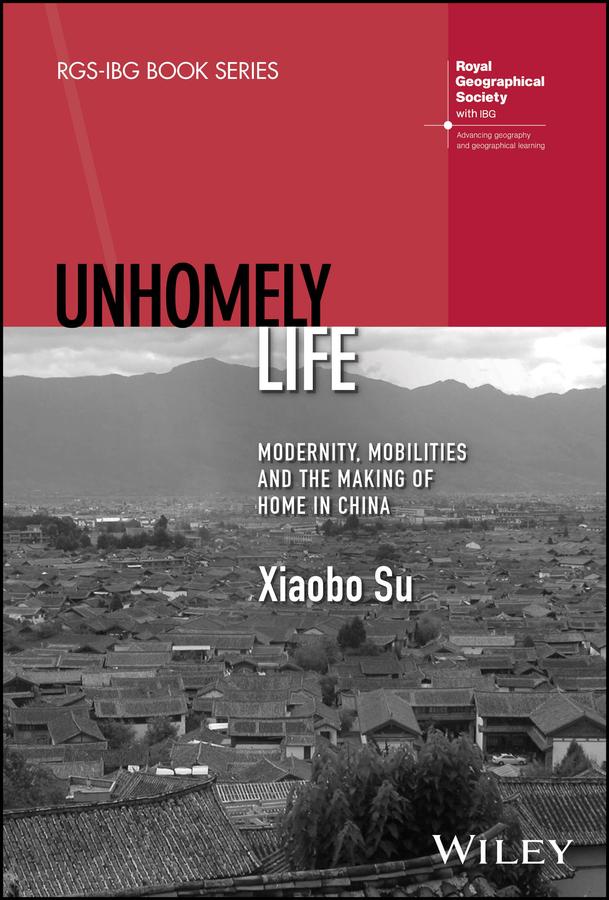
How do Chinas mobile individuals create a sense of home in a rapidly changing world?
Unhomely life, different from houselessness, refers to a fluctuating condition between losing home feelings and the search for home — a prevalent condition in post-Mao China. The faster that Chinese society modernizes, the less individuals feel at home, and the more they yearn for a sense of home. This is the central paradox that Xiaobo Su explores: how mobile individuals—lifestyle migrants and retreat tourists from China's big cities, displaced natives and rural migrants in peripheral China—handle the loss of home and try to experience a homely way of life.
In Unhomely Life, Xiaobo Su examines the subjective experiences of mobile individuals to better understand why they experience the loss of home feelings and how they search for home. Integrating extensive empirical data and a robust theoretical framework, the author presents a journey-based critical analysis of “home” under constant making, un-making, and re-making in post-Mao China. Su argues that the making of home is not a solely economic or rational calculation for maximum return, but rather a synthesis of resistance and compromise under the disappointing conditions of modernity.
Offering rich insights into the continuity and disruption of China's great transformation, Unhomely Life:
- Develops an original theory of unhomely life that incorporates contemporary research and traditional Chinese ideas of home
- Explores the process of homemaking and its implications for understanding the costs of high-speed economic growth in China
- Analyzes mobile individuals across different genders, ages, ethnicities, social classes, and economic backgrounds to address the balance between meaning and money in everyday life
Containing in-depth and sophisticated empirical data collected from 2002 to 2020, Unhomely Life: Modernity, Mobilities, and the Making of Home in China is an invaluable resource for advanced undergraduates, graduate students, lecturers, and academic researchers in cultural studies, migration, tourism, China studies, cultural anthropology, sociology, and social and cultural geography.
Payez facilement par carte, Klarna, Apple Pay ou Google Pay. Pas satisfait ? Vous avez toujours une garantie de remboursement de 14 jours. En savoir plus dans nos conditions. Si vous avez des questions, envoyez-nous un e-mail à hello@memmo.org.
Memmo facilite tes études, où que tu sois dans le monde. On rassemble tes manuels de cours et des outils d'étude intelligents au même endroit : résumés, quiz, podcasts et flashcards. Et il y a Ted, ton compagnon d'étude qui répond à toutes tes questions. Plus de 50 000 étudiants étudient déjà ici – conçu pour t'aider à apprendre plus vite et à moins stresser.