
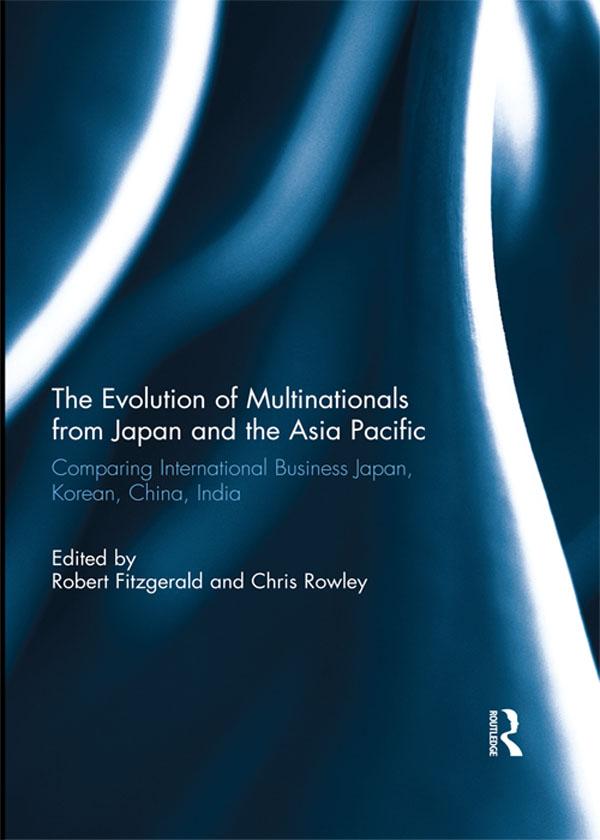
The rise of the Japanese multinational company (JMNC) marked, from the 1980s onwards, an historic change in the structure and in the dynamics of the international economy. For the first time, businesses from a non-Western nation established a competitive global presence, and they did so by bringing their advanced products and management systems to the developed economies of Europe and North America. In the last 30 years, our interpretations of JMNCs have undergone a series of revisions. Korean firms followed JMNCs in the 1990s and the Chinese likewise in the 2000s. A seeming decline in JMNC competitiveness and developments in the structure of the international economy challenged a business model of parental company direction, control and capabilities. Both trends asked questions about how Japanese subsidiaries should operate in global production chains increasingly reliant on contracting out and off-shoring, and how JMNCs might engage more in strategic cooperation and empower subsidiary decision-making. The contributors to this volume consider a wide range of relevant issues: they demonstrate the long-term evolution of JMNCs; they compare the experience of JMNCs with firms from the other two major Asia Pacific economies, Korea and China; they evaluate the applicability of established foreign direct investment (FDI) theory to MNCs from Japan and the Asia Pacific; and they reflect on the internal organization of JMNCs at the global, national and subnational level. This book was originally published as a special issue of Asia Pacific Business Review.
Payez facilement par carte, Klarna, Apple Pay ou Google Pay. Pas satisfait ? Vous avez toujours une garantie de remboursement de 14 jours. En savoir plus dans nos conditions. Si vous avez des questions, envoyez-nous un e-mail à hello@memmo.org.
Memmo facilite tes études, où que tu sois dans le monde. On rassemble tes manuels de cours et des outils d'étude intelligents au même endroit : résumés, quiz, podcasts et flashcards. Et il y a Ted, ton compagnon d'étude qui répond à toutes tes questions. Plus de 50 000 étudiants étudient déjà ici – conçu pour t'aider à apprendre plus vite et à moins stresser.