
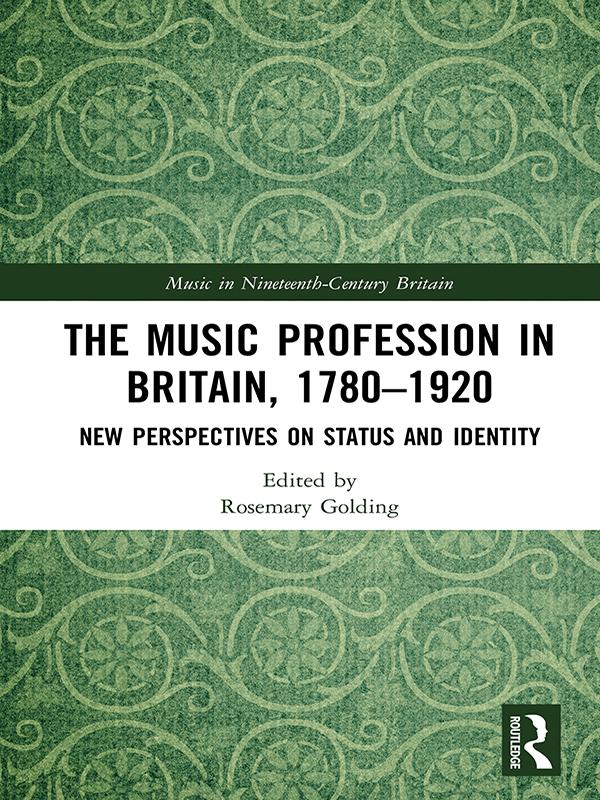
Professionalisation was a key feature of the changing nature of work and society in the nineteenth century, with formal accreditation, registration and organisation becoming increasingly common. Trades and occupations sought protection and improved status via alignment with the professions: an attempt to impose order and standards amid rapid social change, urbanisation and technological development. The structures and expectations governing the music profession were no exception, and were central to changing perceptions of musicians and music itself during the long nineteenth century. The central themes of status and identity run throughout this book, charting ways in which the music profession engaged with its place in society. Contributors investigate the ways in which musicians viewed their own identities, public perceptions of the working musician, the statuses of different sectors of the profession and attempts to manipulate both status and identity. Ten chapters examine a range of sectors of the music profession, from publishers and performers to teachers and military musicians, and overall themes include class, gender and formal accreditation. The chapters demonstrate the wide range of sectors within the music profession, the different ways in which these took on status and identity, and the unique position of professional musicians both to adopt and to challenge social norms.
Payez facilement par carte, Klarna, Apple Pay ou Google Pay. Pas satisfait ? Vous avez toujours une garantie de remboursement de 14 jours. En savoir plus dans nos conditions. Si vous avez des questions, envoyez-nous un e-mail à hello@memmo.org.
Memmo facilite tes études, où que tu sois dans le monde. On rassemble tes manuels de cours et des outils d'étude intelligents au même endroit : résumés, quiz, podcasts et flashcards. Et il y a Ted, ton compagnon d'étude qui répond à toutes tes questions. Plus de 50 000 étudiants étudient déjà ici – conçu pour t'aider à apprendre plus vite et à moins stresser.