
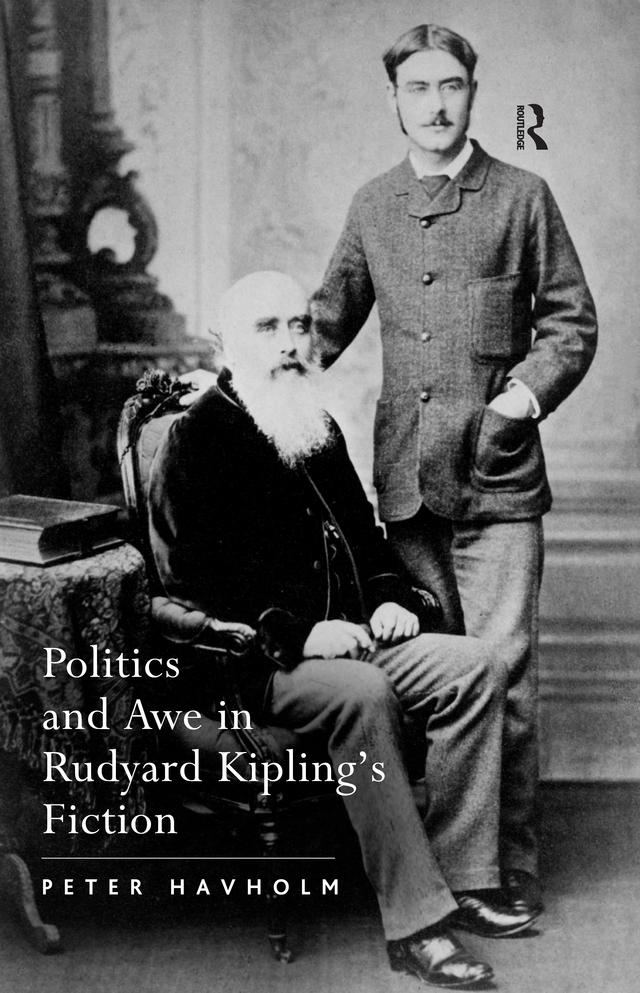
There has been a resurgence of interest in Kipling among critics who struggle to reconcile the multiple pleasures offered by his fiction with the controversial political ideas that inform it. Peter Havholm takes up the challenge, piecing together Kipling's understanding of empire and humanity from evidence in Anglo-Indian and Indian newspapers of the 1870s and 1880s and offering a new explanation for Kipling's post-1891 turn to fantasy and stories written to be enjoyed by children. By dovetailing detailed contextual knowledge of British India with informed and sensitive close readings of well-known works like 'The Man Who Would Be King',' Kim', 'The Light That Failed', and 'They', Havholm offers a fresh reading of Kipling's early and late stories that acknowledges Kipling's achievement as a writer and illuminates the seductive allure of the imperialist fantasy.
Payez facilement par carte, Klarna, Apple Pay ou Google Pay. Pas satisfait ? Vous avez toujours une garantie de remboursement de 14 jours. En savoir plus dans nos conditions. Si vous avez des questions, envoyez-nous un e-mail à hello@memmo.org.
Memmo facilite tes études, où que tu sois dans le monde. On rassemble tes manuels de cours et des outils d'étude intelligents au même endroit : résumés, quiz, podcasts et flashcards. Et il y a Ted, ton compagnon d'étude qui répond à toutes tes questions. Plus de 50 000 étudiants étudient déjà ici – conçu pour t'aider à apprendre plus vite et à moins stresser.
Tu pourrais aussi aimer
Acheter le livre0