
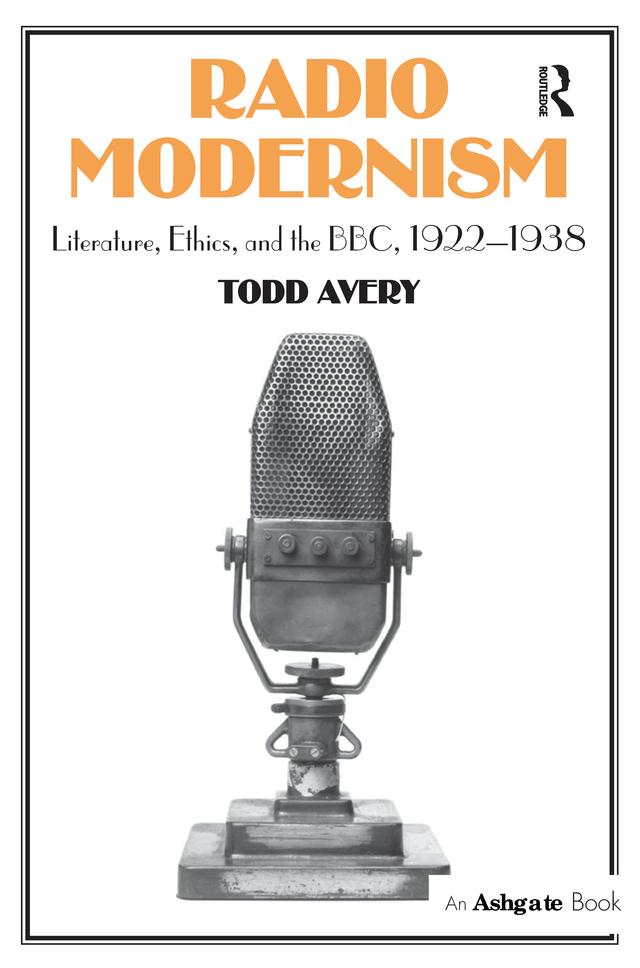
Radio Modernism marries the fields of radio studies and modernist cultural historiography to the recent 'ethical turn' in literary and cultural studies to examine how representative British writers negotiated the moral imperative for public service broadcasting that was crafted, embraced, and implemented by the BBC's founders and early administrators. Weaving together the institutional history of the BBC and developments in ethical philosophy as mediated and forged by writers such as T. S. Eliot, H. G. Wells, E. M. Forster, and Virginia Woolf, Todd Avery shows how these and other prominent authors' involvement with radio helped to shape the ethical contours of literary modernism. In so doing, Avery demonstrates the central role radio played in the early dissemination of modernist art and literature, and also challenges the conventional assertion that modernists were generally elitist and anti-democratic. Intended for readers interested in the fields of media and cultural studies and modernist historiography, this book is remarkable in recapturing for a twenty-first-century audience the interest, fascination, excitement, and often consternation that British radio induced in its literary listeners following its inception in 1922.
Payez facilement par carte, Klarna, Apple Pay ou Google Pay. Pas satisfait ? Vous avez toujours une garantie de remboursement de 14 jours. En savoir plus dans nos conditions. Si vous avez des questions, envoyez-nous un e-mail à hello@memmo.org.
Memmo facilite tes études, où que tu sois dans le monde. On rassemble tes manuels de cours et des outils d'étude intelligents au même endroit : résumés, quiz, podcasts et flashcards. Et il y a Ted, ton compagnon d'étude qui répond à toutes tes questions. Plus de 50 000 étudiants étudient déjà ici – conçu pour t'aider à apprendre plus vite et à moins stresser.
Tu pourrais aussi aimer
Acheter le livre0