
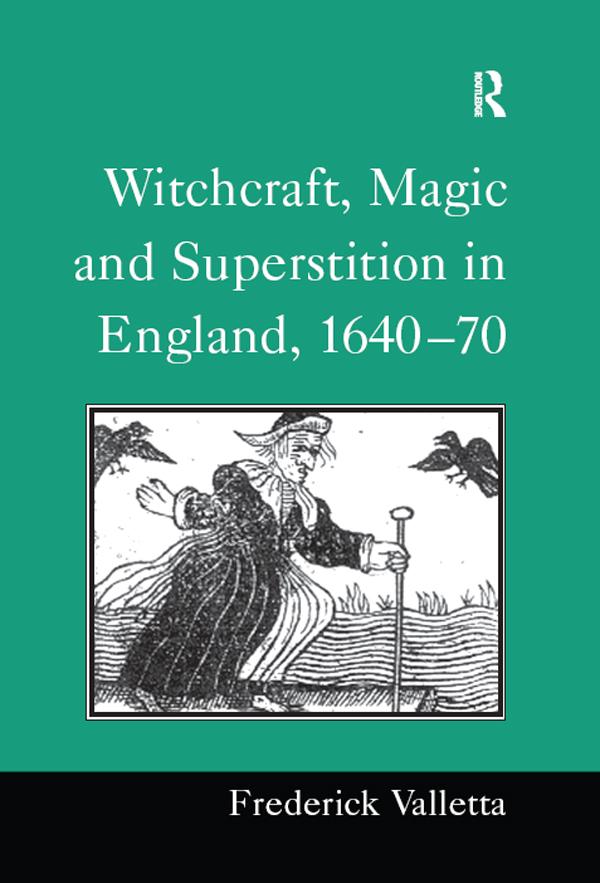
This study examines the relationship between élite and popular beliefs in witchcraft, magic and superstition in England, analyzing such beliefs against the background of political, religious and social upheaval characteristic of the Civil War, Interregnum and Restoration periods. Belief in witchcraft received new impulses because of the general ferment of religious ideas and the tendency of participants in the Civil Wars to resort to imagery drawn from beliefs about the devil and witches; or to use portents to argue for the wrongs of their opponents. Throughout the work, the author stresses that deeply held superstitions were fundamental to belief in witches, the devil, ghosts, apparitions and supernatural healing. Despite the fact that popular superstitions were often condemned, it was recognized that their propaganda value was too useful to ignore. A host of pamphlets and treatises were published during this period which unashamedly incorporated such beliefs. Valletta here explores the manner in which political and religious authorities somewhat cynically used demonic imagery and language to discredit their opponents and to manipulate popular opinion.
Payez facilement par carte, Klarna, Apple Pay ou Google Pay. Pas satisfait ? Vous avez toujours une garantie de remboursement de 14 jours. En savoir plus dans nos conditions. Si vous avez des questions, envoyez-nous un e-mail à hello@memmo.org.
Memmo facilite tes études, où que tu sois dans le monde. On rassemble tes manuels de cours et des outils d'étude intelligents au même endroit : résumés, quiz, podcasts et flashcards. Et il y a Ted, ton compagnon d'étude qui répond à toutes tes questions. Plus de 50 000 étudiants étudient déjà ici – conçu pour t'aider à apprendre plus vite et à moins stresser.
Tu pourrais aussi aimer
Acheter le livre0