
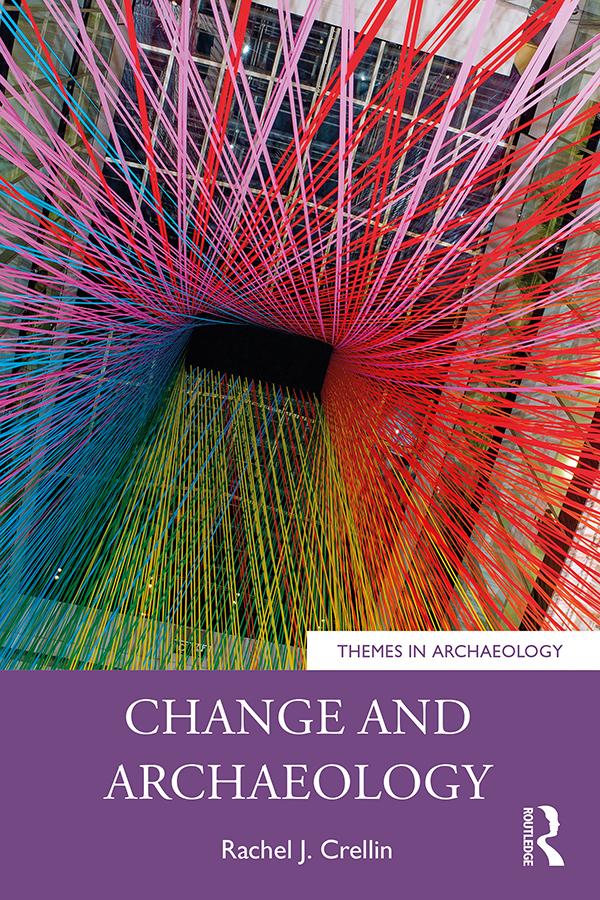
Change and Archaeology explores how archaeologists have historically described, interpreted, and explained change, and argues that change has been under-theorised.
The study of change is central to the discipline of archaeology, but change is complex, and this makes it challenging to write about in nuanced ways that effectively capture the nature of our world. Relational approaches offer archaeologists more scope to explore change in complex and subtle ways. Change and Archaeology presents a posthumanist, post-anthropocentric, new materialist approach to change. It argues that our world is constantly in the process of becoming and always on the move. By recasting change as the norm rather than the exception and distributing it between both humans and non-humans, this book offers a new theoretical framework for exploring change in the past that allows us to move beyond block-time approaches where change is located only in transitional moments and periods are characterised by blocks of stasis.
Archaeologists, scholars, anthropologists and historians interested in the theoretical frameworks we use to interpret the past will find this book a fascinating new insight into the way our world changes and evolves. The approaches presented within will be of use to anyone studying and writing about the way societies and their environs move through time.
Payez facilement par carte, Klarna, Apple Pay ou Google Pay. Pas satisfait ? Vous avez toujours une garantie de remboursement de 14 jours. En savoir plus dans nos conditions. Si vous avez des questions, envoyez-nous un e-mail à hello@memmo.org.
Memmo facilite tes études, où que tu sois dans le monde. On rassemble tes manuels de cours et des outils d'étude intelligents au même endroit : résumés, quiz, podcasts et flashcards. Et il y a Ted, ton compagnon d'étude qui répond à toutes tes questions. Plus de 50 000 étudiants étudient déjà ici – conçu pour t'aider à apprendre plus vite et à moins stresser.