
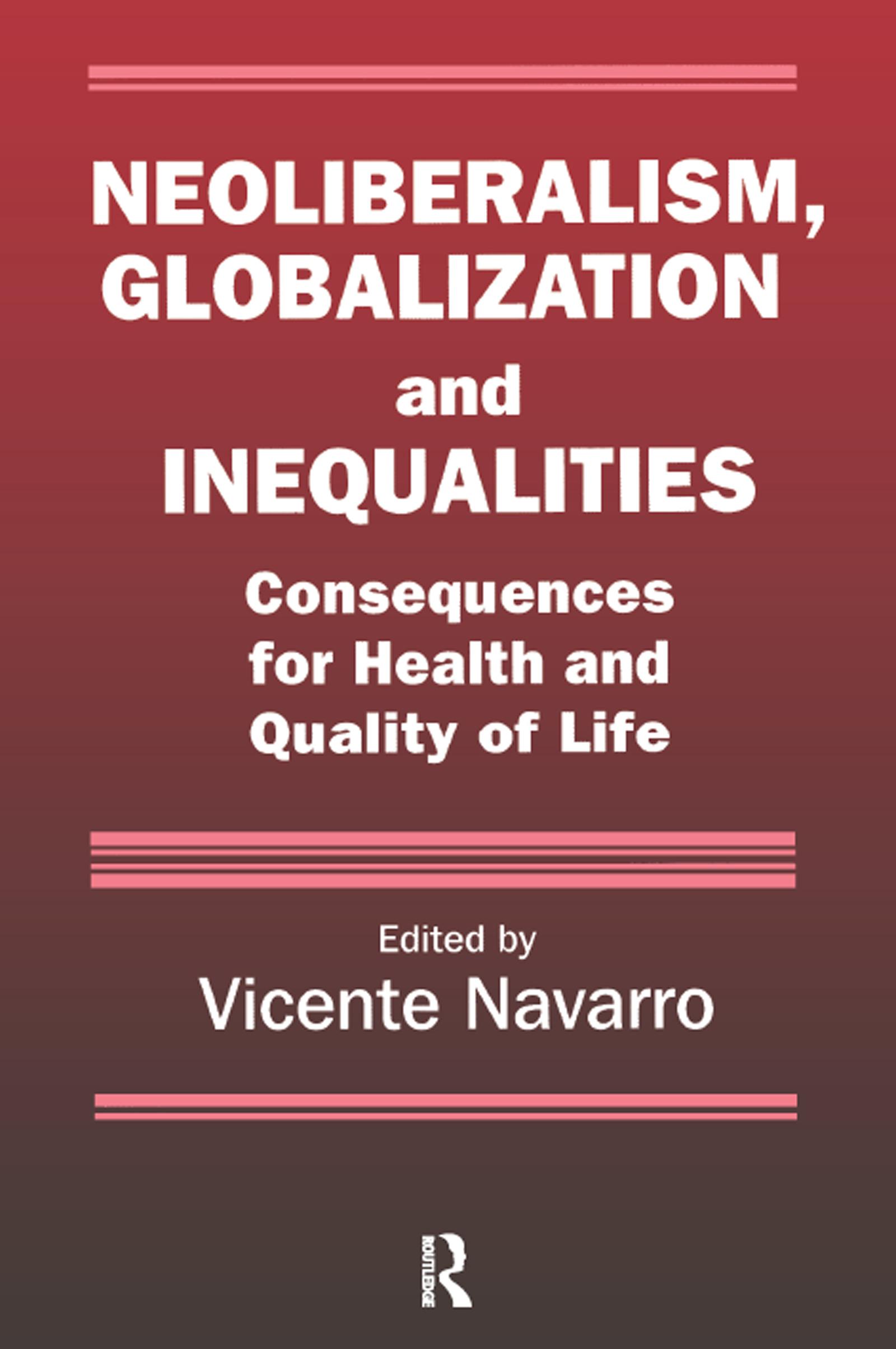
Since U.S. President Reagan and U.K. Prime Minister Thatcher, a major ideology (under the name of economic science) has been expanded worldwide that claims that the best policies to stimulate human development are those that reduce the role of the state in economic and social lives: privatizing public services and public enterprises, deregulating the mobility of capital and labor, eliminating protectionism, and reducing public social protection. This ideology, called 'neoliberalism,' has guided the globalization of economic activity and become the conventional wisdom in international agencies and institutions (such as the IMF, World Bank, World Trade Organization, and the technical agencies of the United Nations, including the WHO). Reproduced in the 'Washington consensus' in the United States and the 'Brussels consensus' in the European Union, this ideology has guided policies widely accepted as the only ones possible and advisable.This book assembles a series of articles that challenge that ideology. Written by well-known scholars, these articles question each of the tenets of neoliberal doctrine, showing how the policies guided by this ideology have adversely affected human development in the countries where they have been implemented.
Payez facilement par carte, Klarna, Apple Pay ou Google Pay. Pas satisfait ? Vous avez toujours une garantie de remboursement de 14 jours. En savoir plus dans nos conditions. Si vous avez des questions, envoyez-nous un e-mail à hello@memmo.org.
Memmo facilite tes études, où que tu sois dans le monde. On rassemble tes manuels de cours et des outils d'étude intelligents au même endroit : résumés, quiz, podcasts et flashcards. Et il y a Ted, ton compagnon d'étude qui répond à toutes tes questions. Plus de 50 000 étudiants étudient déjà ici – conçu pour t'aider à apprendre plus vite et à moins stresser.
Tu pourrais aussi aimer
Acheter le livre0