
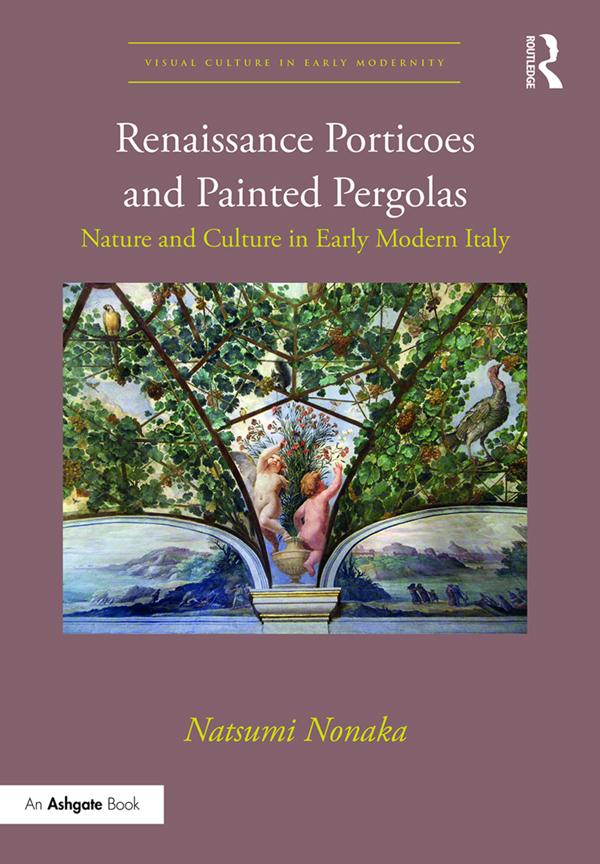
This book is the first study of the portico and its decorative program as a cultural phenomenon in Renaissance Italy. Focusing on a largely neglected group of porticoes decorated with painted pergolas that appeared in Rome and environs in the sixteenth and early seventeenth centuries, it tells the story of how an element of the garden—the pergola—became a pictorial topos in portico decoration, and evolved, hand in hand with its real cousin in the garden, into an object for cultural emulation among the educated patrons of early modern Rome. The liminality of both the portico and the pergola at the interface of architecture and garden is key to the interpretation of these architectural and painted forms, which rests on the intersecting frameworks of the classical tradition, natural history, and the cultural identity of the aristocracy. In the mediating space of the Renaissance portico, the illusionism pergola created an art gallery, a natural history museum, and a virtual garden where one could engage in leisurely strolls, learned conversations, appreciation of art, and scientific investigation, as well as extensive travel across time and space. The book proposes the interpretation that the illusionistic pergola was an artistic formula for the early modern perception of nature.
Payez facilement par carte, Klarna, Apple Pay ou Google Pay. Pas satisfait ? Vous avez toujours une garantie de remboursement de 14 jours. En savoir plus dans nos conditions. Si vous avez des questions, envoyez-nous un e-mail à hello@memmo.org.
Memmo facilite tes études, où que tu sois dans le monde. On rassemble tes manuels de cours et des outils d'étude intelligents au même endroit : résumés, quiz, podcasts et flashcards. Et il y a Ted, ton compagnon d'étude qui répond à toutes tes questions. Plus de 50 000 étudiants étudient déjà ici – conçu pour t'aider à apprendre plus vite et à moins stresser.