
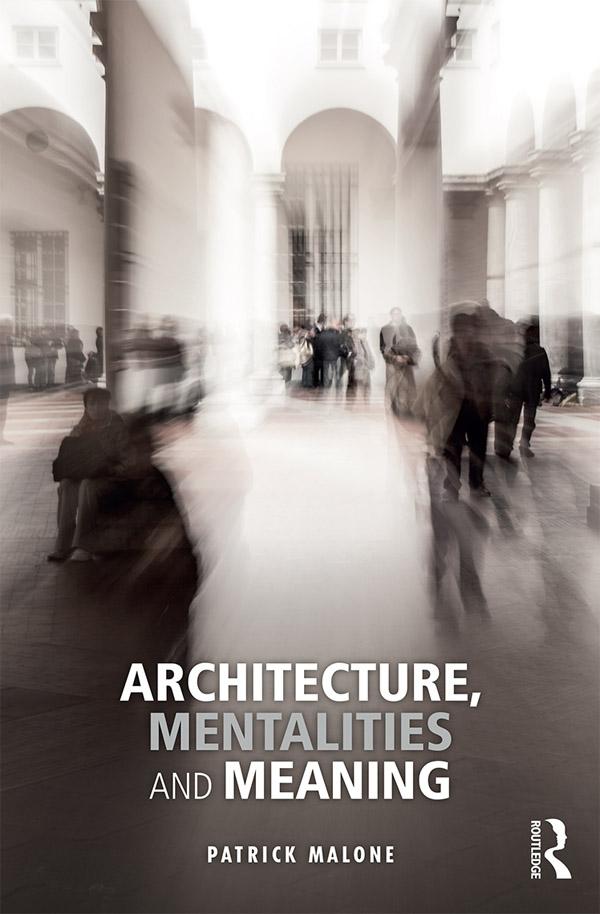
In order to function, architectural theory and practice must be shaped to suit current cultural, economic, and political forces. Thus, architecture embodies reductive logic that conditions the treatment of human and social processes – which raises the question of how to define objectivity for architectural mentalities that must conform to a set of immediate conditions.
This book focuses on meaning, and on the physical and mental processes that define life in built environments. The potential to draw knowledge from aesthetics, psychology, political economy, philosophy, geography, and sociology is offset by the fact that architectural logic is inevitably reductive, cultural, socio-economic, and political. However, despite the duty to conform, it is argued that the treatment of human processes, and the understanding of architectural mentalities, can benefit from interdisciplinary linkages, small freedoms, and cracks in a system of imperatives that can yield the means of greater objectivity.
This is valuable reading for students and researchers interested in architectural theory as a working reality, and in the relationships between architecture and other fields.
Payez facilement par carte, Klarna, Apple Pay ou Google Pay. Pas satisfait ? Vous avez toujours une garantie de remboursement de 14 jours. En savoir plus dans nos conditions. Si vous avez des questions, envoyez-nous un e-mail à hello@memmo.org.
Memmo facilite tes études, où que tu sois dans le monde. On rassemble tes manuels de cours et des outils d'étude intelligents au même endroit : résumés, quiz, podcasts et flashcards. Et il y a Ted, ton compagnon d'étude qui répond à toutes tes questions. Plus de 50 000 étudiants étudient déjà ici – conçu pour t'aider à apprendre plus vite et à moins stresser.