
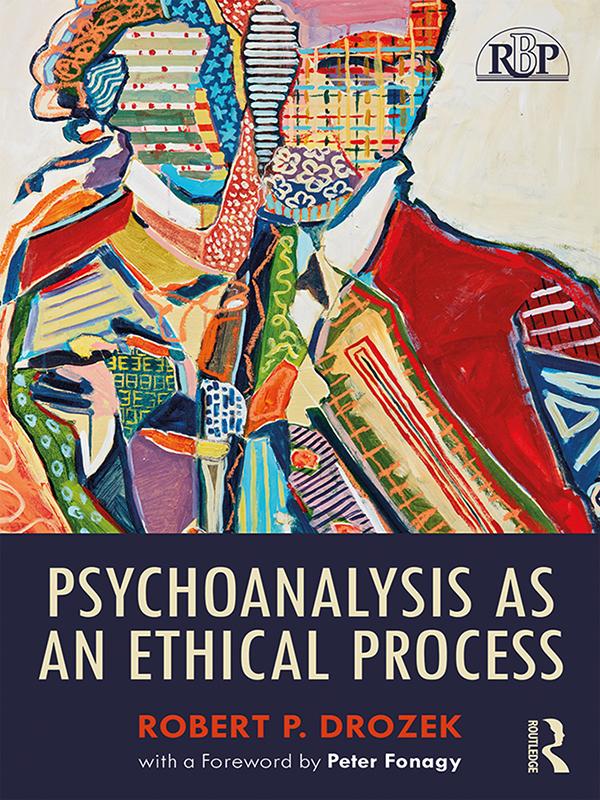
What role does ethics play in the practice of psychoanalysis and psychotherapy?
For most of its history, psychoanalysis has viewed ethics as a "side issue" in clinical work—occasionally relevant, but not central to therapeutic action. In Psychoanalysis as an Ethical Process, Robert Drozek highlights the foundational importance of ethical experience in the therapeutic relationship, as well as the role that ethical commitments have played in inspiring what has been called the "relational turn" in psychoanalysis.
Using vivid clinical examples from the treatment of patients with severe personality disorders, Drozek sketches out an ethically grounded vision of analytic process, wherein analyst and patient are engaged in the co-construction of an intersubjective space that is progressively more consistent with their intrinsic worth as human beings. Psychoanalysis can thus be seen as a unique vehicle for therapeutic and ethical change, leading to a dramatic expansion of agency, altruism, and self-esteem for both participants. By bringing our analytic theories into closer contact with our ethical experiences as human beings, we can connect more fully with the fundamental humanity that unites us with our patients, and that serves as the basis for deep and lasting therapeutic change.
This book will be of interest to psychotherapists and psychoanalysts, as well as scholars in ethical theory and philosophy.
Payez facilement par carte, Klarna, Apple Pay ou Google Pay. Pas satisfait ? Vous avez toujours une garantie de remboursement de 14 jours. En savoir plus dans nos conditions. Si vous avez des questions, envoyez-nous un e-mail à hello@memmo.org.
Memmo facilite tes études, où que tu sois dans le monde. On rassemble tes manuels de cours et des outils d'étude intelligents au même endroit : résumés, quiz, podcasts et flashcards. Et il y a Ted, ton compagnon d'étude qui répond à toutes tes questions. Plus de 50 000 étudiants étudient déjà ici – conçu pour t'aider à apprendre plus vite et à moins stresser.