
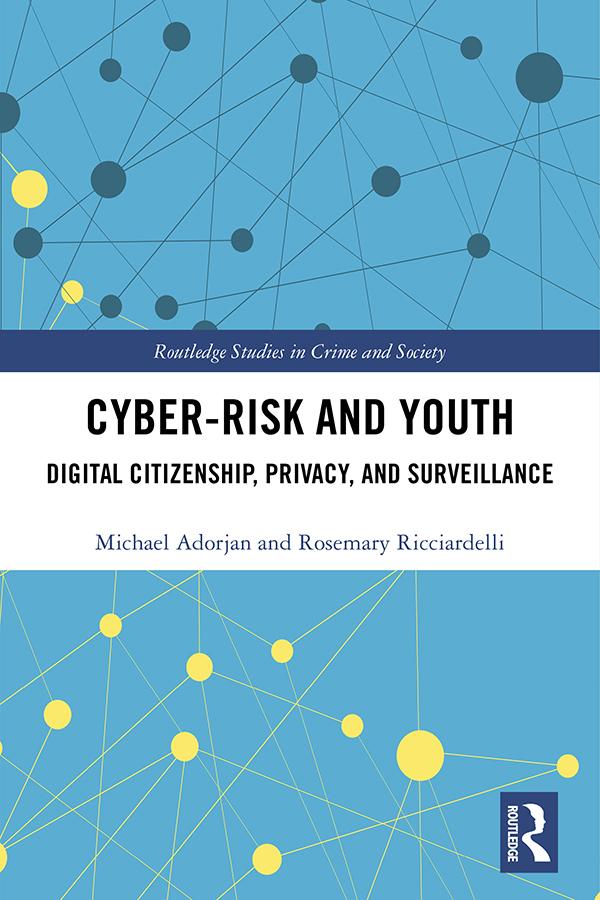
Cyber-risks are moving targets and societal responses to combat cyber-victimization are often met by the distrust of young people. Drawing on original research, this book explores how young people define, perceive, and experience cyber-risks, how they respond to both the messages they are receiving from society regarding their safety online, and the various strategies and practices employed by society in regulating their online access and activities. This book complements existing quantitative examinations of cyberbullying assessing its extent and frequency, but also aims to critique and extend knowledge of how cyber-risks such as cyberbullying are perceived and responded to.
Following a discussion of their methodology and their experiences of conducting research with teens, the authors discuss the social network services that teens are using and what they find appealing about them, and address teens’ experiences with and views towards parental and school-based surveillance. The authors then turn directly to areas of concern expressed by their participants, such as relational aggression, cyberhacking, privacy, and privacy management, as well as sexting. The authors conclude by making recommendations for policy makers, educators and teens – not only by drawing from their own theoretical and sociological interpretations of their findings, but also from the responses and recommendations given by their participants about going online and tackling cyber-risk.
One of the first texts to explore how young people respond to attempts to regulate online activity, this book will be key reading for those involved in research and study surrounding youth crime, cybercrime, youth culture, media and crime, and victimology – and will inform those interested in addressing youth safety online how to best approach what is often perceived as a sensitive and volatile social problem.
Payez facilement par carte, Klarna, Apple Pay ou Google Pay. Pas satisfait ? Vous avez toujours une garantie de remboursement de 14 jours. En savoir plus dans nos conditions. Si vous avez des questions, envoyez-nous un e-mail à hello@memmo.org.
Memmo facilite tes études, où que tu sois dans le monde. On rassemble tes manuels de cours et des outils d'étude intelligents au même endroit : résumés, quiz, podcasts et flashcards. Et il y a Ted, ton compagnon d'étude qui répond à toutes tes questions. Plus de 50 000 étudiants étudient déjà ici – conçu pour t'aider à apprendre plus vite et à moins stresser.