
Inter-Dependent Teams: people working together to achieve a common goal.
Extra-Dependent Teams: people learning together to develop a common practice.
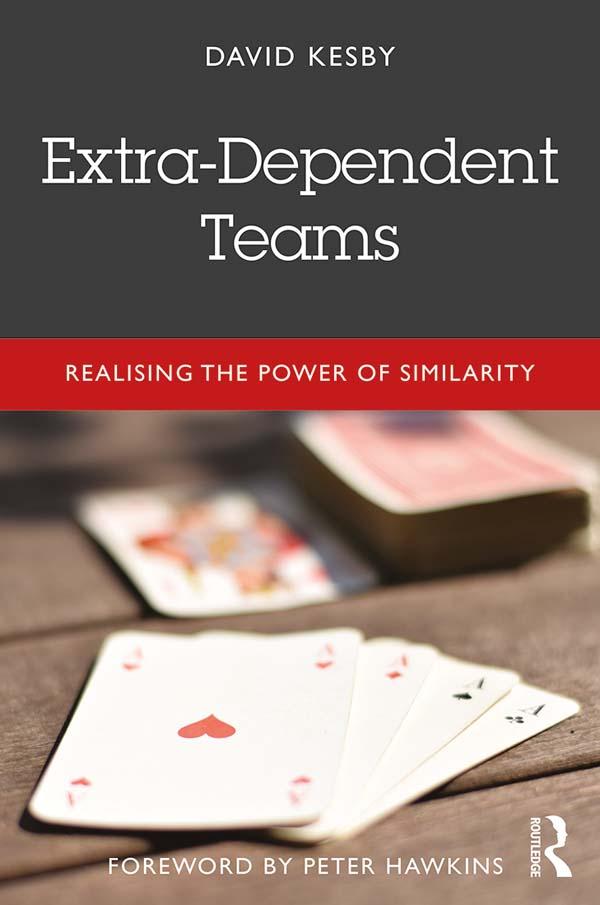
Extra-Dependent Teams: Realising the Power of Similarity reframes the conventional mental model of teams into two complementary mental models of Extra-Dependent and Inter-Dependent Teams. Both types of team operate inside organisations today, but convention doesn’t realise their difference. Extra-Dependent Teams are present in organisations because of their similarity – they do similar work in similar ways, but don’t actually work together. People who lead them often feel like they are herding cats. Convention cites them as dysfunctional.
But cats don’t herd. They are independent whilst all being the same. Realising this difference provides new ways of understanding and addressing the problems that convention can’t overcome.
The reader will be introduced to the distinctness of Extra-Dependent Teams, their dynamics, how they perform, how they develop and how to lead them. Inspired by research on communities of practice and social identity, the book delivers an original and pragmatic approach to teams, being packed with examples, case studies, practical guidance and words of warning for managers and others about how to transform their Extra-Dependent Teams from peripheral problems into engines of innovation and growth.
Payez facilement par carte, Klarna, Apple Pay ou Google Pay. Pas satisfait ? Vous avez toujours une garantie de remboursement de 14 jours. En savoir plus dans nos conditions. Si vous avez des questions, envoyez-nous un e-mail à hello@memmo.org.
Memmo facilite tes études, où que tu sois dans le monde. On rassemble tes manuels de cours et des outils d'étude intelligents au même endroit : résumés, quiz, podcasts et flashcards. Et il y a Ted, ton compagnon d'étude qui répond à toutes tes questions. Plus de 50 000 étudiants étudient déjà ici – conçu pour t'aider à apprendre plus vite et à moins stresser.