
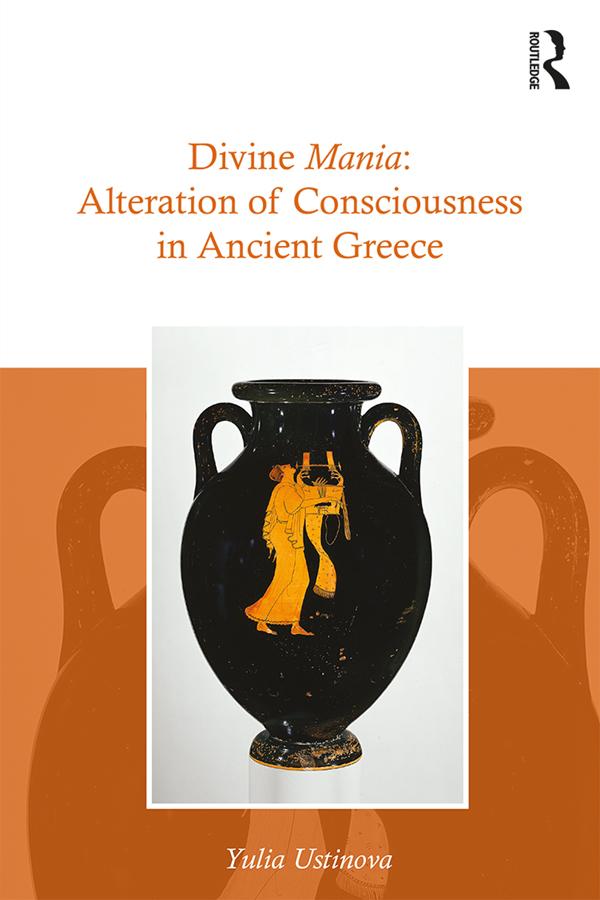
‘Our greatest blessings come to us by way of mania, provided it is given us by divine gift,’ – says Socrates in Plato’s Phaedrus. Certain forms of alteration of consciousness, considered to be inspired by supernatural forces, were actively sought in ancient Greece. Divine mania comprises a fascinating array of diverse experiences: numerous initiates underwent some kind of alteration of consciousness during mystery rites; sacred officials and inquirers attained revelations in major oracular centres; possession states were actively sought; finally, some thinkers, such as Pythagoras and Socrates, probably practiced manipulation of consciousness. These experiences, which could be voluntary or involuntary, intense or mild, were interpreted as an invasive divine power within one’s mind, or illumination granted by a super-human being.
Greece was unique in its attitude to alteration of consciousness. From the perspective of individual and public freedom, the prominent position of the divine mania in Greek society reflects its acceptance of the inborn human proclivity to experience alteration of consciousness, interpreted in positive terms as god-sent. These mental states were treated with cautious respect, and in contrast to the majority of complex societies, ancient and modern, were never suppressed or pushed to the cultural and social periphery.
Payez facilement par carte, Klarna, Apple Pay ou Google Pay. Pas satisfait ? Vous avez toujours une garantie de remboursement de 14 jours. En savoir plus dans nos conditions. Si vous avez des questions, envoyez-nous un e-mail à hello@memmo.org.
Memmo facilite tes études, où que tu sois dans le monde. On rassemble tes manuels de cours et des outils d'étude intelligents au même endroit : résumés, quiz, podcasts et flashcards. Et il y a Ted, ton compagnon d'étude qui répond à toutes tes questions. Plus de 50 000 étudiants étudient déjà ici – conçu pour t'aider à apprendre plus vite et à moins stresser.