
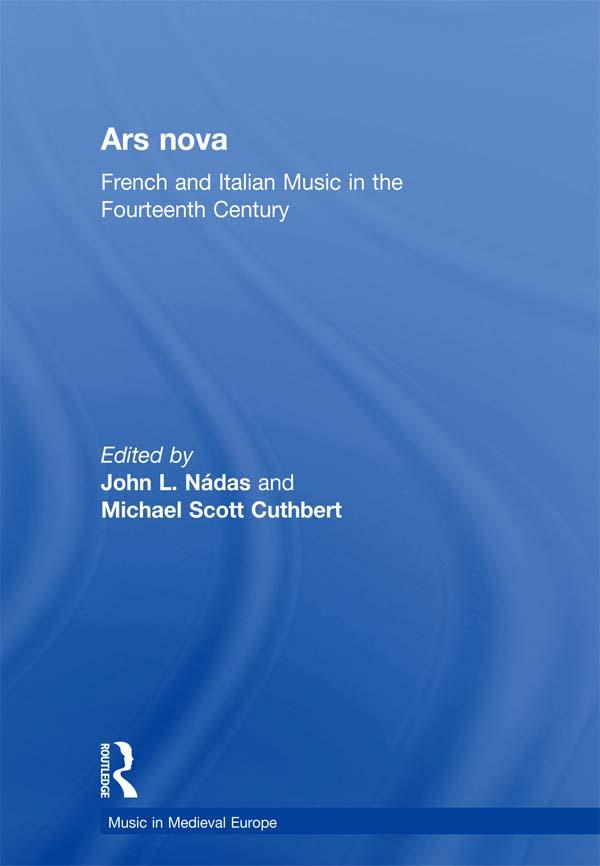
In the early fourteenth century, musicians in France and later Italy established new traditions of secular and sacred polyphony. This ars nova, or "new art," popularized by theorists such as Philippe de Vitry and Johannes de Muris was the among the first of many later movements to establish the music of the present as a clean break from the past. The rich music of this period, by composers such as Guillaume de Machaut and Francesco Landini, is not only beautiful, but also rewards deep study and analysis. Yet contradictions and gaps abound in the ars nova of the fourteenth and early fifteenth centuries-how do we read this music? how do we perform this music? what was the cultural context of these performances? These problems are well met by the ingenuity of approaches and solutions found by scholars in this volume. The twenty-seven articles brought together reflect the broad methodological and chronological range of scholarly inquiry on the ars nova.
Payez facilement par carte, Klarna, Apple Pay ou Google Pay. Pas satisfait ? Vous avez toujours une garantie de remboursement de 14 jours. En savoir plus dans nos conditions. Si vous avez des questions, envoyez-nous un e-mail à hello@memmo.org.
Memmo facilite tes études, où que tu sois dans le monde. On rassemble tes manuels de cours et des outils d'étude intelligents au même endroit : résumés, quiz, podcasts et flashcards. Et il y a Ted, ton compagnon d'étude qui répond à toutes tes questions. Plus de 50 000 étudiants étudient déjà ici – conçu pour t'aider à apprendre plus vite et à moins stresser.
Tu pourrais aussi aimer
Acheter le livre0