
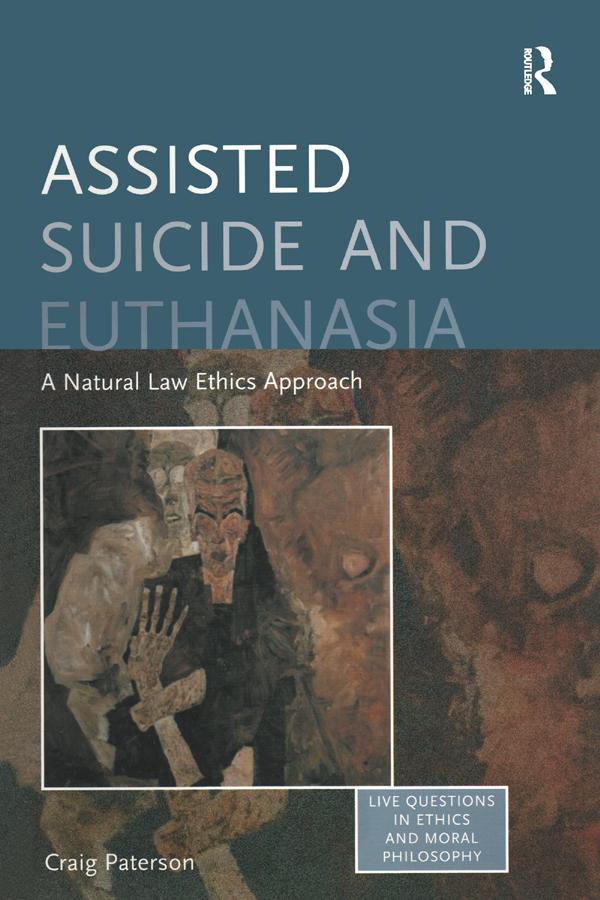
As medical technology advances and severely injured or ill people can be kept alive and functioning long beyond what was previously medically possible, the debate surrounding the ethics of end-of-life care and quality-of-life issues has grown more urgent.In this lucid and vigorous new book, Craig Paterson discusses assisted suicide and euthanasia from a fully fledged but non-dogmatic secular natural law perspective. He rehabilitates and revitalises the natural law approach to moral reasoning by developing a pluralistic account of just why we are required by practical rationality to respect and not violate key demands generated by the primary goods of persons, especially human life.Important issues that shape the moral quality of an action are explained and analysed: intention/foresight; action/omission; action/consequences; killing/letting die; innocence/non-innocence; and, person/non-person. Paterson defends the central normative proposition that 'it is always a serious moral wrong to intentionally kill an innocent human person, whether self or another, notwithstanding any further appeal to consequences or motive'.
Payez facilement par carte, Klarna, Apple Pay ou Google Pay. Pas satisfait ? Vous avez toujours une garantie de remboursement de 14 jours. En savoir plus dans nos conditions. Si vous avez des questions, envoyez-nous un e-mail à hello@memmo.org.
Memmo facilite tes études, où que tu sois dans le monde. On rassemble tes manuels de cours et des outils d'étude intelligents au même endroit : résumés, quiz, podcasts et flashcards. Et il y a Ted, ton compagnon d'étude qui répond à toutes tes questions. Plus de 50 000 étudiants étudient déjà ici – conçu pour t'aider à apprendre plus vite et à moins stresser.
Tu pourrais aussi aimer
Acheter le livre0