
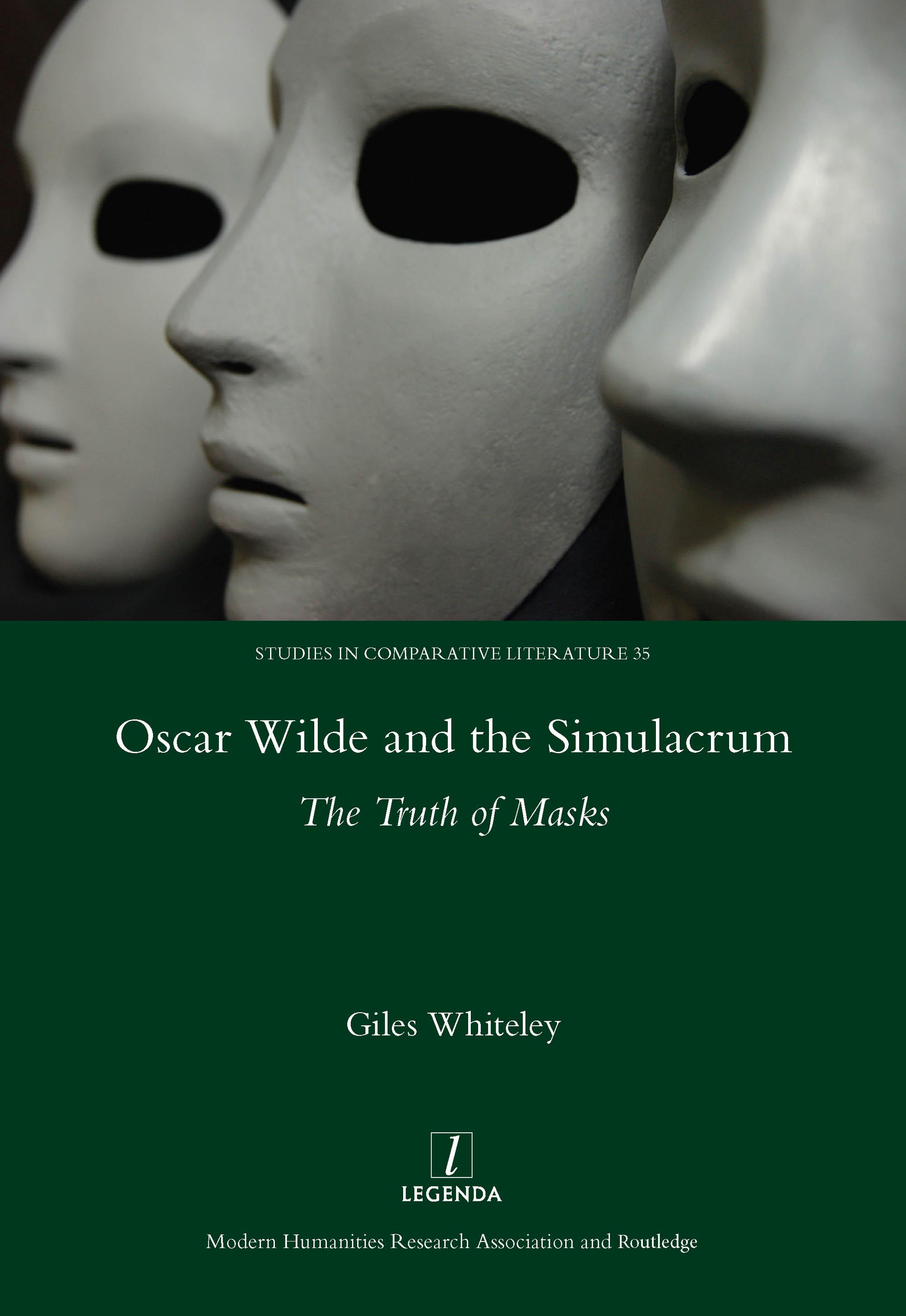
Oscar Wilde is more than a name, more than an author. From precocious Oxford undergraduate to cause celebre of the West End of the 1890s, to infamous criminal, the proper name Wilde has become an event in the history of literature and culture. Taking Wilde seriously as a philosopher in his own right, Whiteley's groundbreaking book places his texts into their philosophical context in order to show how Wilde broke from his peers, and in particular from idealism, and challenges recent neo-historicist readings of Wilde which seem content to limit his irruptive power. Using the paradoxical concept of the simulacrum to resituate Wilde's work in relation to both his precursors and his contemporaries, Whiteley's study reads Wilde through Deleuze and postmodern philosophical commentary on the simulacrum. In a series of striking juxtapositions, Whiteley challenges us to rethink both Oscar Wilde's aesthetics and his philosophy, to take seriously both the man and the mask. His philosophy of masks is revealed to figure a truth of a different kind - the simulacra through which Wilde begins to develop and formulate a mature philosophy that constitutes an ethics of joy.
Payez facilement par carte, Klarna, Apple Pay ou Google Pay. Pas satisfait ? Vous avez toujours une garantie de remboursement de 14 jours. En savoir plus dans nos conditions. Si vous avez des questions, envoyez-nous un e-mail à hello@memmo.org.
Memmo facilite tes études, où que tu sois dans le monde. On rassemble tes manuels de cours et des outils d'étude intelligents au même endroit : résumés, quiz, podcasts et flashcards. Et il y a Ted, ton compagnon d'étude qui répond à toutes tes questions. Plus de 50 000 étudiants étudient déjà ici – conçu pour t'aider à apprendre plus vite et à moins stresser.
Tu pourrais aussi aimer
Acheter le livre0