
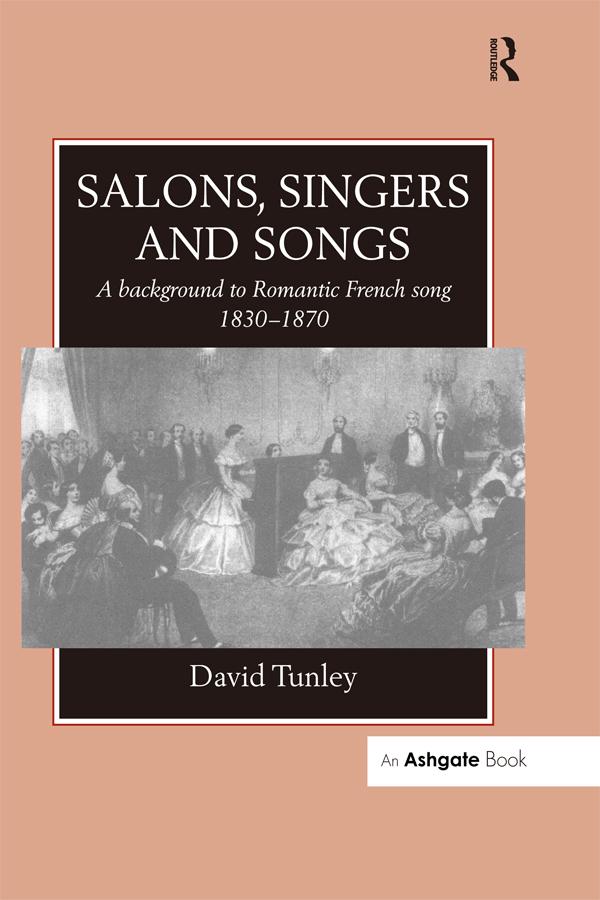
Music! It is the great pleasure of this city, the great occupation of the drawing-rooms, which have banished politics, and which have renounced literature, from ennui. Jules Janin, An American in Paris, 1843 Afternoon and evening entertainments in the drawing rooms of the aristocracy and upper middle classes were a staple of cultural life in nineteenth-century Paris. Music was often a feature of these occasions and private salons provided important opportunities for musicians, especially singers, to develop their careers. Such recitals included excerpts from favourite operas, but also the more traditional forms of French song, the romance and its successor the m die. Drawing on extensive research into the musical press of the period, David Tunley paints a vivid portrait of the nineteenth-century Parisien salons and the performers who sang in them. Against this colourful backdrop, he discusses the development of French romantic song, with its hallmarks of simplicity and clarity of diction. Combined with Italian influences and the impression made by Schubert's songs, the French romance developed into a form with greater complexity - the m die. Salons, Singers and Songs describes this transformation and the seeds it sowed for music by later composers such as Faur Duparc and Debussy.
Payez facilement par carte, Klarna, Apple Pay ou Google Pay. Pas satisfait ? Vous avez toujours une garantie de remboursement de 14 jours. En savoir plus dans nos conditions. Si vous avez des questions, envoyez-nous un e-mail à hello@memmo.org.
Memmo facilite tes études, où que tu sois dans le monde. On rassemble tes manuels de cours et des outils d'étude intelligents au même endroit : résumés, quiz, podcasts et flashcards. Et il y a Ted, ton compagnon d'étude qui répond à toutes tes questions. Plus de 50 000 étudiants étudient déjà ici – conçu pour t'aider à apprendre plus vite et à moins stresser.
Tu pourrais aussi aimer
Acheter le livre0