
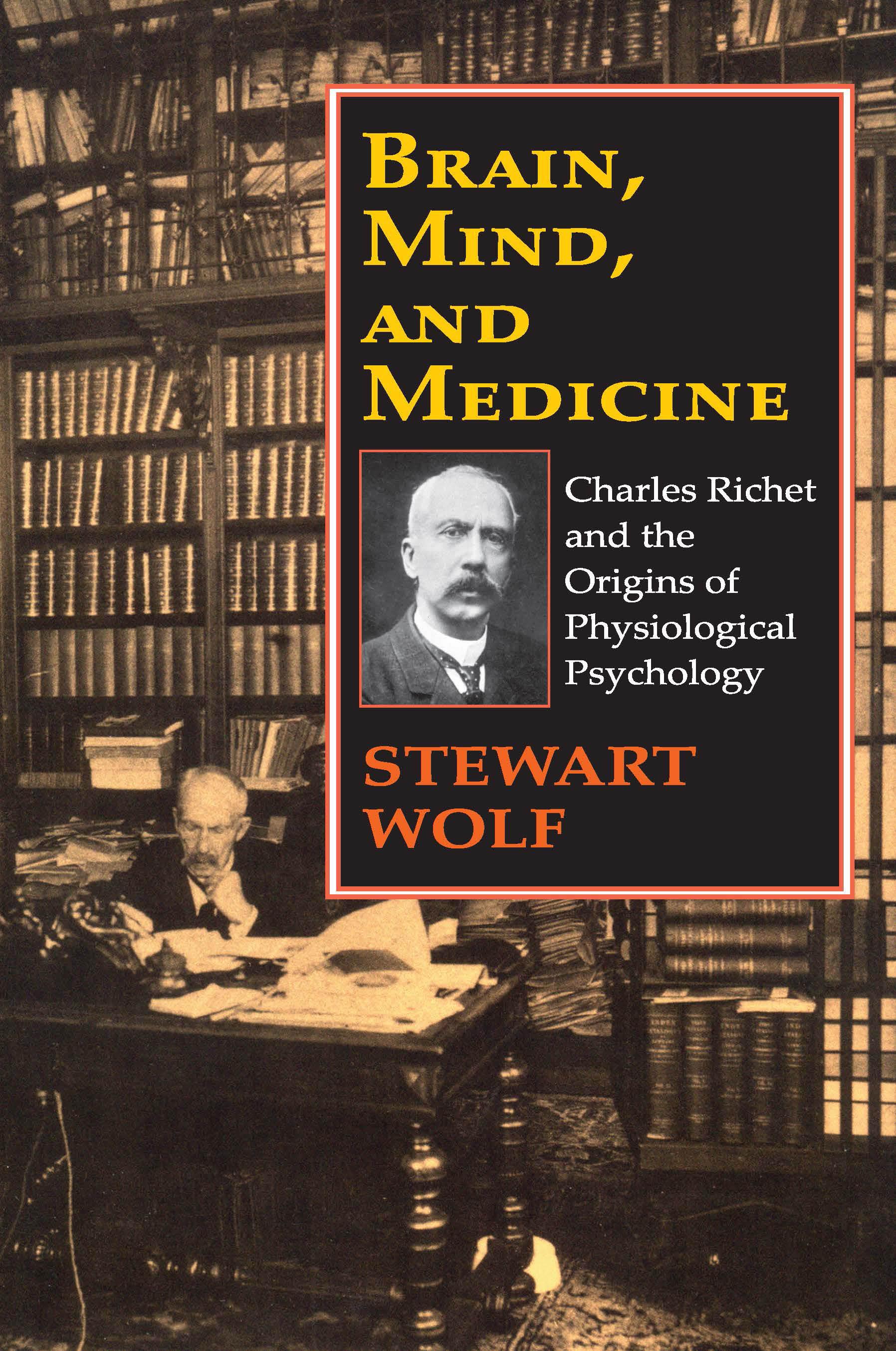
Charles Richet was one of the most remarkable figures in the history of medical science. He is best known for his work on the body's immune reactions to foreign substances for which he won the Nobel Prize in medicine in 1913. Richet was also a poet, playwright, historian, bibliographer, political activist, classical scholar, and pioneer in aircraft design.Brain, Mind, and Medicine is the first major biography of Richet in any language. Wolf brilliantly situates Richet's work in the intellectual currents of Europe during the latter half of the nineteenth and early twentieth century. Richet was a contemporary of Wilhelm Wundt and William James. All three considered psychology to be an aspect of physiology governed by biological laws. But while James and Wundt considered consciousness as a process influenced by experience without much reference to neural structures, Richet's focus was on the brain itself as shaped by genetics and experience and serving as the organ of the mind.Brain, Mind, and Medicine illuminates a significant chapter in scientific and cultural history. It should be read by medical scientists, historians, and individuals interested in medicine and psychology.
Payez facilement par carte, Klarna, Apple Pay ou Google Pay. Pas satisfait ? Vous avez toujours une garantie de remboursement de 14 jours. En savoir plus dans nos conditions. Si vous avez des questions, envoyez-nous un e-mail à hello@memmo.org.
Memmo facilite tes études, où que tu sois dans le monde. On rassemble tes manuels de cours et des outils d'étude intelligents au même endroit : résumés, quiz, podcasts et flashcards. Et il y a Ted, ton compagnon d'étude qui répond à toutes tes questions. Plus de 50 000 étudiants étudient déjà ici – conçu pour t'aider à apprendre plus vite et à moins stresser.
Tu pourrais aussi aimer
Acheter le livre0