
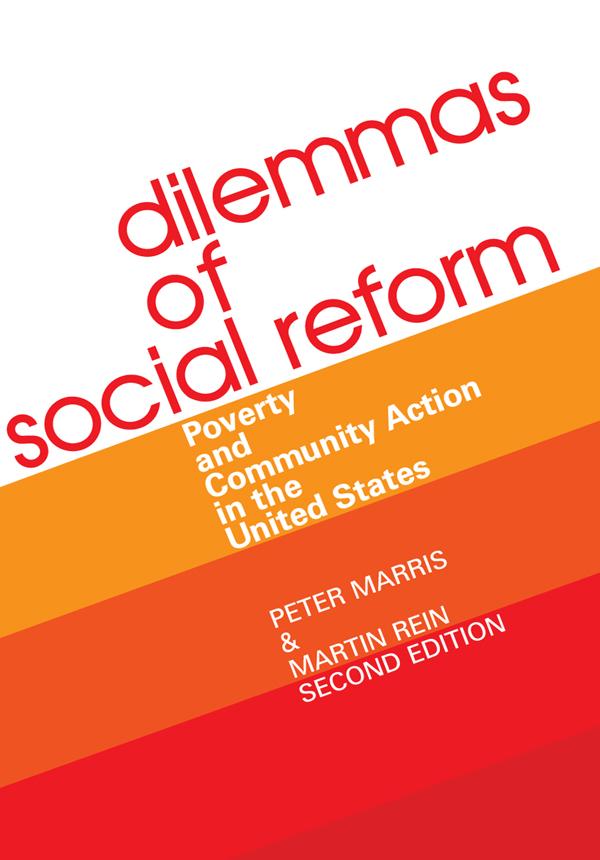
This title is a classic work on social reform. It is an account of the origins and development of community action from its beginnings in the Ford Foundation Gray Area Programs and the President's Committee on Juvenile Delinquency, through the rise and decline of the War on Poverty and the Model Cities program. In the ruthlessly impartial examination of various poverty programs, two social scientists one British, one American--explain why programs of such size and complexity have only a minimal chance of success. They describe the realities of reform and point up how the conservatism of bureaucracy, the rivalries among political and administrative jurisdictions, and the apathy of the poor have often hindered national and local efforts. On the other hand, they show how these obstacles can be overcome by an imaginative combination of leadership, democratic participation, and scientific analysis.
This second edition also contains a new chapter that was not included in the first edition. This new chapter, tries to set the study in a broader context: first, by interpreting the political motives and constraints that led to the adoption of community action as a principal strategy of a nationwide war on poverty and second, by discussing the underlying weaknesses of democracy that community action implied and sought to tackle.
Distinguished by an analysis of the major critics of community action, the book provides a balanced perspective of the movement against its many foes. It is important reading for anyone engaged in planning or community action, whether as organizer, consultant, official, or politician.
Payez facilement par carte, Klarna, Apple Pay ou Google Pay. Pas satisfait ? Vous avez toujours une garantie de remboursement de 14 jours. En savoir plus dans nos conditions. Si vous avez des questions, envoyez-nous un e-mail à hello@memmo.org.
Memmo facilite tes études, où que tu sois dans le monde. On rassemble tes manuels de cours et des outils d'étude intelligents au même endroit : résumés, quiz, podcasts et flashcards. Et il y a Ted, ton compagnon d'étude qui répond à toutes tes questions. Plus de 50 000 étudiants étudient déjà ici – conçu pour t'aider à apprendre plus vite et à moins stresser.