
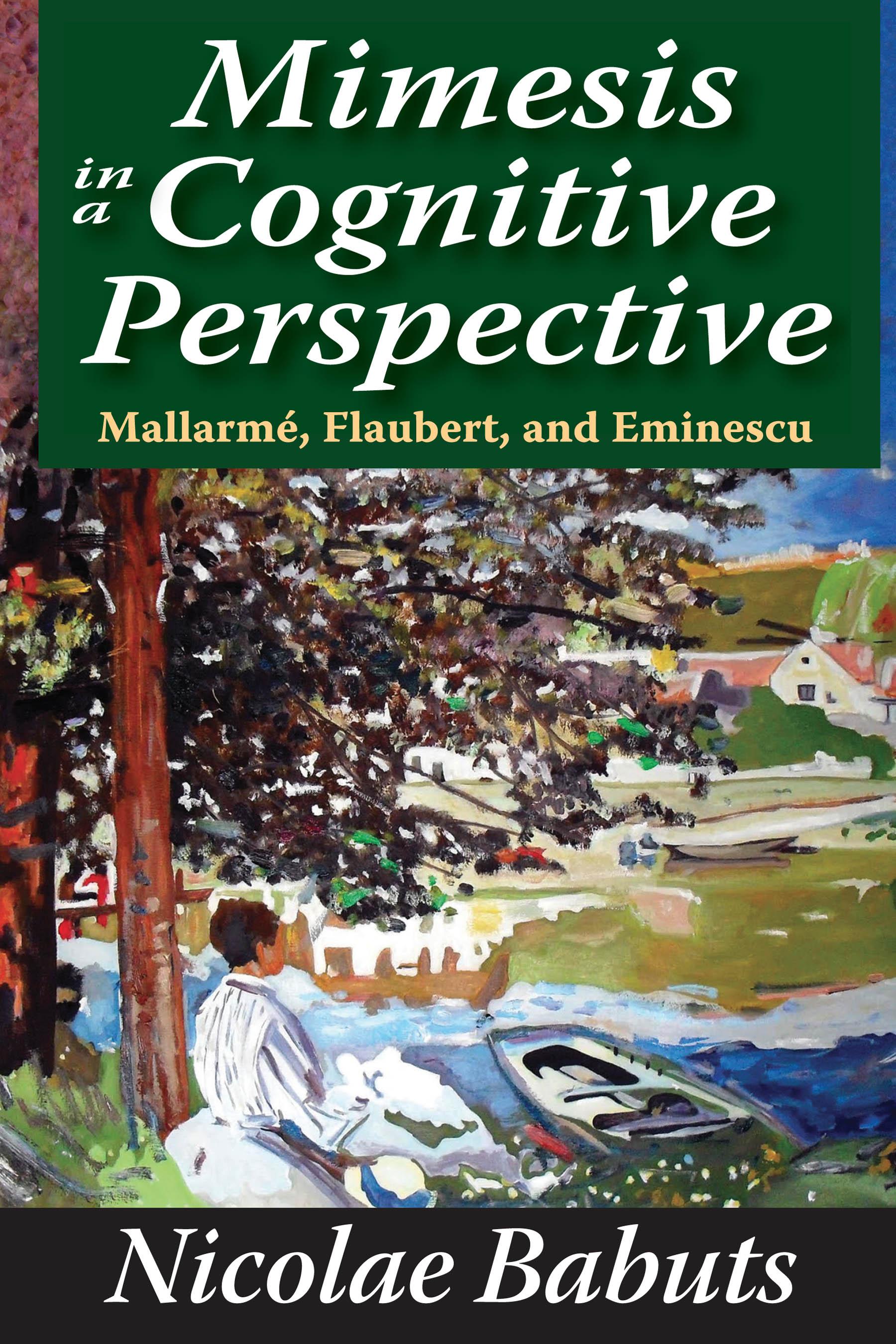
Mimesis is a critical and philosophical term going back to Aristotle. It carries a wide range of meanings, including imitation, representation, mimicry, the act of expression, and the presentation of self. In modern literary criticism, mimesis has received renewed attention in the last two or three decades and been subject to wide-ranging interpretations. Nicolae Babuts looks at the concept of mimesis from a cognitive perspective. He identifies two main strands: the mimetic relation of art and poetry to the world, defined in terms of reference to an external reality, and the importance of memory in the making of plots or storytelling.Babuts suggests that there is a material identity we cannot know beyond the limits of our senses and intellect and a symbolic or coded identity that is processed by memory. All writers, including Mallarme in his esoteric poetry, Flaubert in his realist narratives, and Mihai Eminescu, the Romanian poet, in his romantic poems, rely on mimetic strategies to link the two identities: the images in memory to the outside reality. All order their narratives in accordance with the dynamics of memory. Babuts describes this phenomenon with great insight, showing how new traditions are formed.
Payez facilement par carte, Klarna, Apple Pay ou Google Pay. Pas satisfait ? Vous avez toujours une garantie de remboursement de 14 jours. En savoir plus dans nos conditions. Si vous avez des questions, envoyez-nous un e-mail à hello@memmo.org.
Memmo facilite tes études, où que tu sois dans le monde. On rassemble tes manuels de cours et des outils d'étude intelligents au même endroit : résumés, quiz, podcasts et flashcards. Et il y a Ted, ton compagnon d'étude qui répond à toutes tes questions. Plus de 50 000 étudiants étudient déjà ici – conçu pour t'aider à apprendre plus vite et à moins stresser.
Tu pourrais aussi aimer
Acheter le livre0