
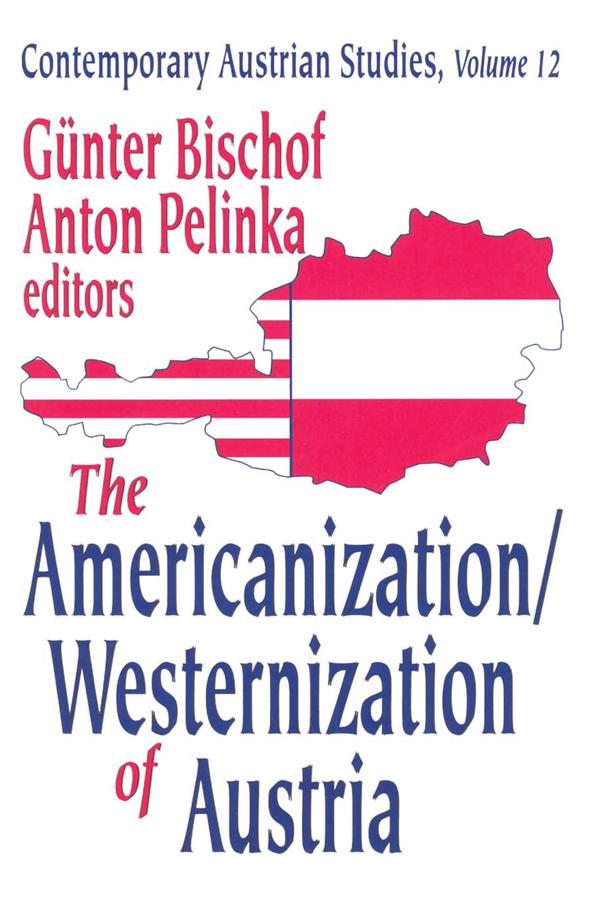
Political, economic, social, and cultural modernization dramatically transformed twentieth-century Austria. Innovative new methods of production and management, such as the assembly line, changed Austrian business after World War I, much as the Marshall Plan shaped the economy after World War II. At the same time, jazz, Hollywood movies, television programming, and mass commodities were as popular in Austria as elsewhere in Western Europe. Even political campaigns followed American trends. All this occurred despite the fact that in West Germany, American nostrums and models had been rejected, modified, or "translated" into milder versions. Ultimately, Austria was "Western Europeanized" when it joined the European Union in 1995. How Western are the Austrians? This volume analyzes trends toward Americanization and Westernization in Austria throughout the twentieth century. Reinhold Wagnleitner's lead essay studies the foreign politics of American pop culture.
Anna Schober and Monika Bernold analyze the influence of Hollywood movies and television on postwar Austrian society. Reinhard Sieder follows changing discourses on family life, while Ingrid Bauer looks at American influences on Austrian women. Maria-Regina Kecht, Kurt Drexel, and Christina Hainzl follow the American impact on Austrian literature, opera, and art. Banker Anton Fink examines American banking and finance practices. Andre Pfoertner and Matthias Fuchs study the Americanization of Austrian business and tourism. Helmut Lackner describes how well-heeled Austrian travelers to the United States brought back innovative American production methods and other ideas gleaned from world expositions before World War I. American influences on Austrian politics and political science are dissected by Gunter Bischof, Martin Kofler, Fritz Plasser, and Anton Pelinka. The Americanization of Vienna is the subject of journalist Armin Thurnher's essay. Comparisons with West Germany are presented by Michael Hochgesc
Payez facilement par carte, Klarna, Apple Pay ou Google Pay. Pas satisfait ? Vous avez toujours une garantie de remboursement de 14 jours. En savoir plus dans nos conditions. Si vous avez des questions, envoyez-nous un e-mail à hello@memmo.org.
Memmo facilite tes études, où que tu sois dans le monde. On rassemble tes manuels de cours et des outils d'étude intelligents au même endroit : résumés, quiz, podcasts et flashcards. Et il y a Ted, ton compagnon d'étude qui répond à toutes tes questions. Plus de 50 000 étudiants étudient déjà ici – conçu pour t'aider à apprendre plus vite et à moins stresser.