
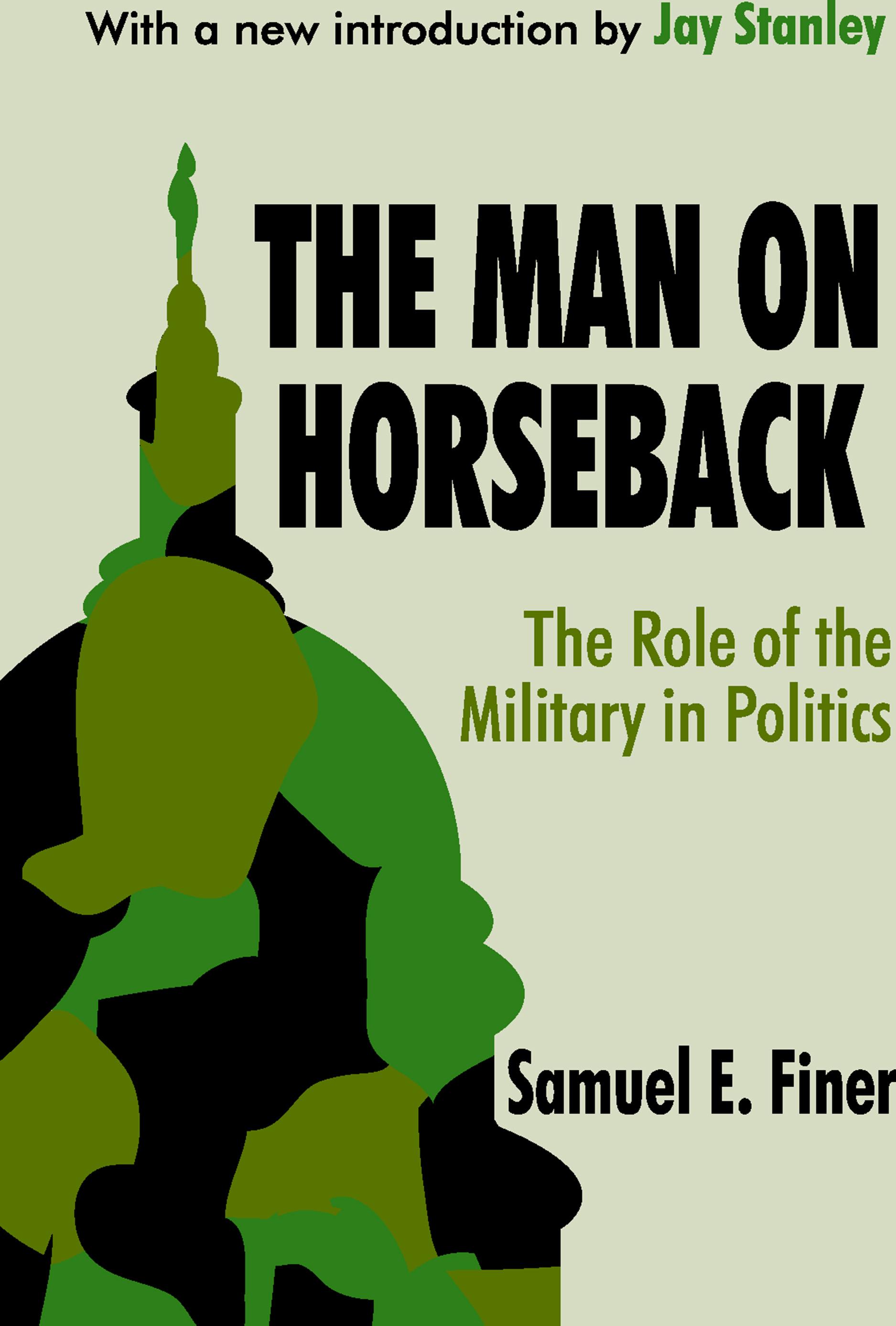
The role of the military in a society raises a number of issues: How much separation should there be between a civil government and its army? Should the military be totally subordinate to the polity? Or should the armed forces be allowed autonomy in order to provide national security? Recently, the dangers of military dictatorships-as have existed in countries like Panama, Chile, and Argentina-have become evident. However, developing countries often lack the administrative ability and societal unity to keep the state functioning in an orderly and economically feasible manner without military intervention.Societies, of course, have dealt with the realities of these problems throughout their histories, and the action they have taken at any particular point in time has depended on numerous factors. In the ""first world"" of democratic countries, the civil-military relationship has been thoroughly integrated, and indeed by most modern standards this is seen as essential. However, several influential Western thinkers have developed theories arguing for the separation of the military from any political or social role. Samuel Huntington, emphasized that professionalism would presuppose that the military should intervene as little as possible in the political sphere. Samuel E. Finer, in contrast, emphasizes that a government can be efficient enough way to keep the civil-military relationship in check, ensuring that the need for intervention by the armed forces in society would be minimal. At the time of the book's original publication, perhaps as a consequence of a post-World War II Cold War atmosphere, this was by no means a universally accepted position. Some considered the military to be a legitimate threat to a free society. Today's post-Cold War environment is an appropriate time to reconsider Finer's classic argument.The Man on Horseback continues to be an important contribution to the study of the military's role in the realm of politics, and will be of interest to stu
Payez facilement par carte, Klarna, Apple Pay ou Google Pay. Pas satisfait ? Vous avez toujours une garantie de remboursement de 14 jours. En savoir plus dans nos conditions. Si vous avez des questions, envoyez-nous un e-mail à hello@memmo.org.
Memmo facilite tes études, où que tu sois dans le monde. On rassemble tes manuels de cours et des outils d'étude intelligents au même endroit : résumés, quiz, podcasts et flashcards. Et il y a Ted, ton compagnon d'étude qui répond à toutes tes questions. Plus de 50 000 étudiants étudient déjà ici – conçu pour t'aider à apprendre plus vite et à moins stresser.
Tu pourrais aussi aimer
Acheter le livre0