
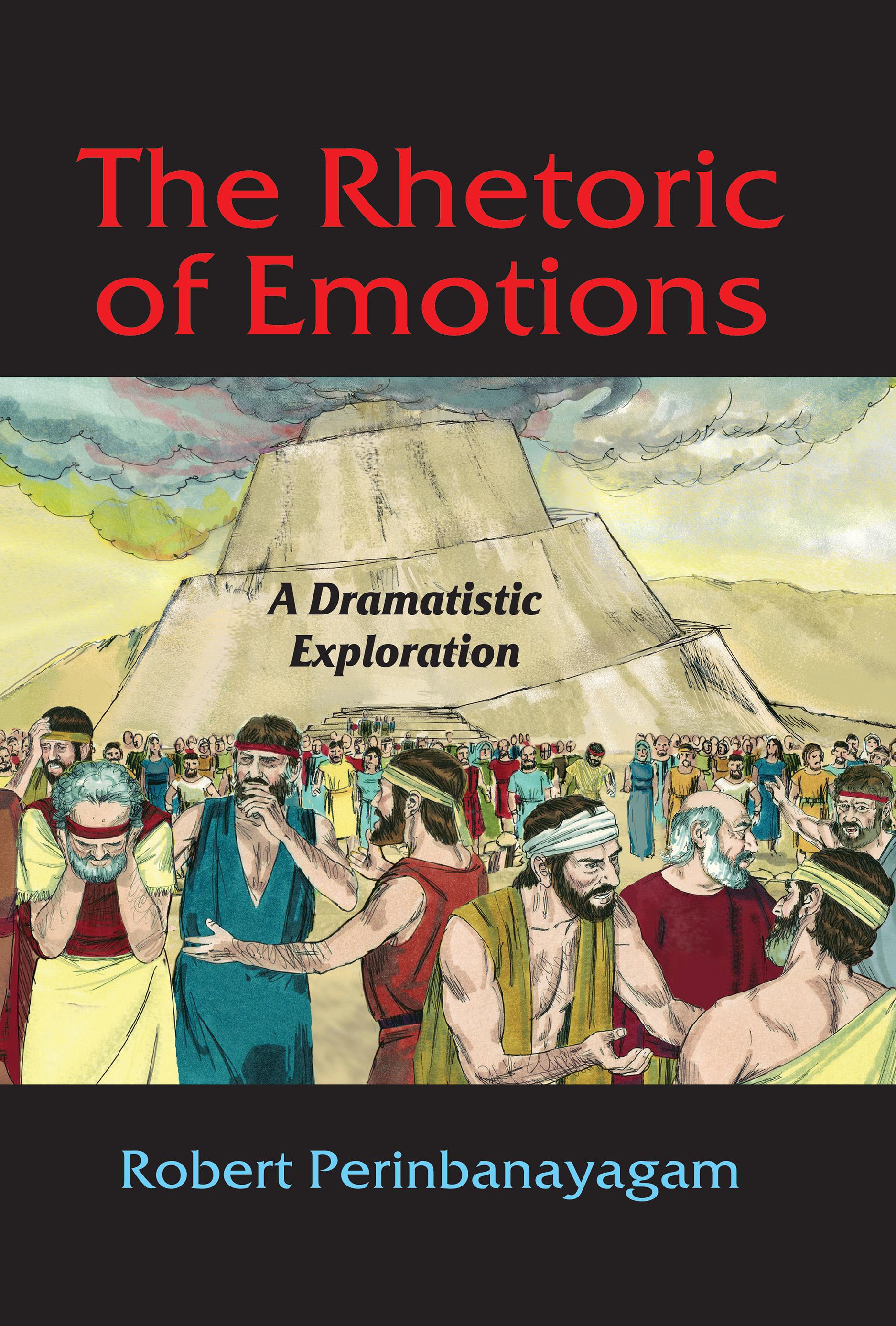
Kenneth Burke, founder of the critical method of dramatism, believed that motives and attitudes are constantly generated by individuals as they encounter social situations and material objects in the course of their everyday lives. In The Rhetoric of Emotions, Robert Perinbanayagam proposes that by analysing individuals' experiences, especially through their interaction with creative outlets, we can come to a deeper understanding of how the human mind systematically approaches the emotive process.The author maintains that individuals use spoken language, and all other forms of symbolism, including art and literature, to elicit social cooperation and emotional understanding, both in regard to the world around them and within themselves. Rhetoric and culture are mechanisms for managing values, behaviour, and emotions. In order to ground this philosophical viewpoint, Perinbanayagam strategically discusses famous novels and paintings to show how individuals construct emotional responses to the rhetorical objects at their disposal.In addition to the ideas of Burke and George Herbert Mead, the ideas of Max Weber, Georg Simmel, Charles Sanders Peirce, Edmund Husserl, Alfred Schutz, and Erving Goffman are also reflected in this provocative analysis.
Pages: 286
Catégorie: Sociologi
e-ISBN: 9781351475112
Poids d'expédition: 1.2 kg
Expédié sous: 1-2 jours
Payez facilement par carte, Klarna, Apple Pay ou Google Pay. Pas satisfait ? Vous avez toujours une garantie de remboursement de 14 jours. En savoir plus dans nos conditions. Si vous avez des questions, envoyez-nous un e-mail à hello@memmo.org.
Memmo facilite tes études, où que tu sois dans le monde. On rassemble tes manuels de cours et des outils d'étude intelligents au même endroit : résumés, quiz, podcasts et flashcards. Et il y a Ted, ton compagnon d'étude qui répond à toutes tes questions. Plus de 50 000 étudiants étudient déjà ici – conçu pour t'aider à apprendre plus vite et à moins stresser.
Tu pourrais aussi aimer
Acheter le livre0