
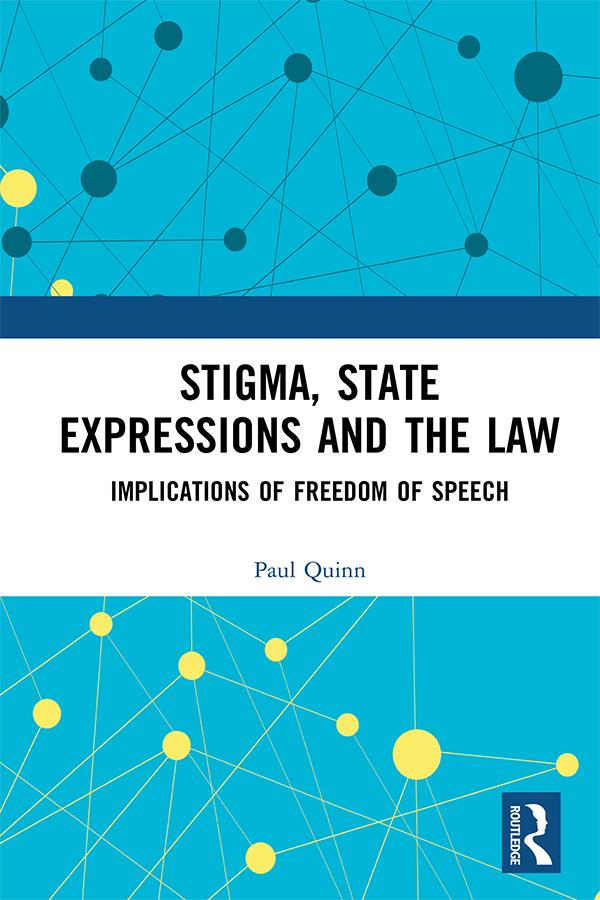
This book demonstrates the difficulties the law is likely to encounter in regulating the expressive activities of the state, particularly with regard to the stigmatization of vulnerable groups and minorities.
Freedom of speech is indispensable to a democratic society, enabling it to operate with a healthy level of debate and discussion. Historically, legal scholars have underappreciated the power of stigmatization, instead focusing on anti-discrimination law, and the implicit assumption that the state is permitted to communicate freely with little fear of legal consequences. Whilst integral to a democratic society, the freedom of a state to express itself can however also be corrosive, allowing influential figures and organizations the possibility to stigmatize vulnerable groups within society. The book takes this idea and, uniquely weaving legal analysis with extant psychological and sociological research, shows that current legal approaches to stigmatization are limited. Starting with a deep insight into what constitutes state expressions and how they can become stigmatizing, the book then goes on to look into the capacity the law currently has to limit these expressions and asks even if it could, should it?
This fascinating study of an increasingly topical subject will be of interest to any legal scholar working in the field of freedom of expression and discrimination law.
Payez facilement par carte, Klarna, Apple Pay ou Google Pay. Pas satisfait ? Vous avez toujours une garantie de remboursement de 14 jours. En savoir plus dans nos conditions. Si vous avez des questions, envoyez-nous un e-mail à hello@memmo.org.
Memmo facilite tes études, où que tu sois dans le monde. On rassemble tes manuels de cours et des outils d'étude intelligents au même endroit : résumés, quiz, podcasts et flashcards. Et il y a Ted, ton compagnon d'étude qui répond à toutes tes questions. Plus de 50 000 étudiants étudient déjà ici – conçu pour t'aider à apprendre plus vite et à moins stresser.