
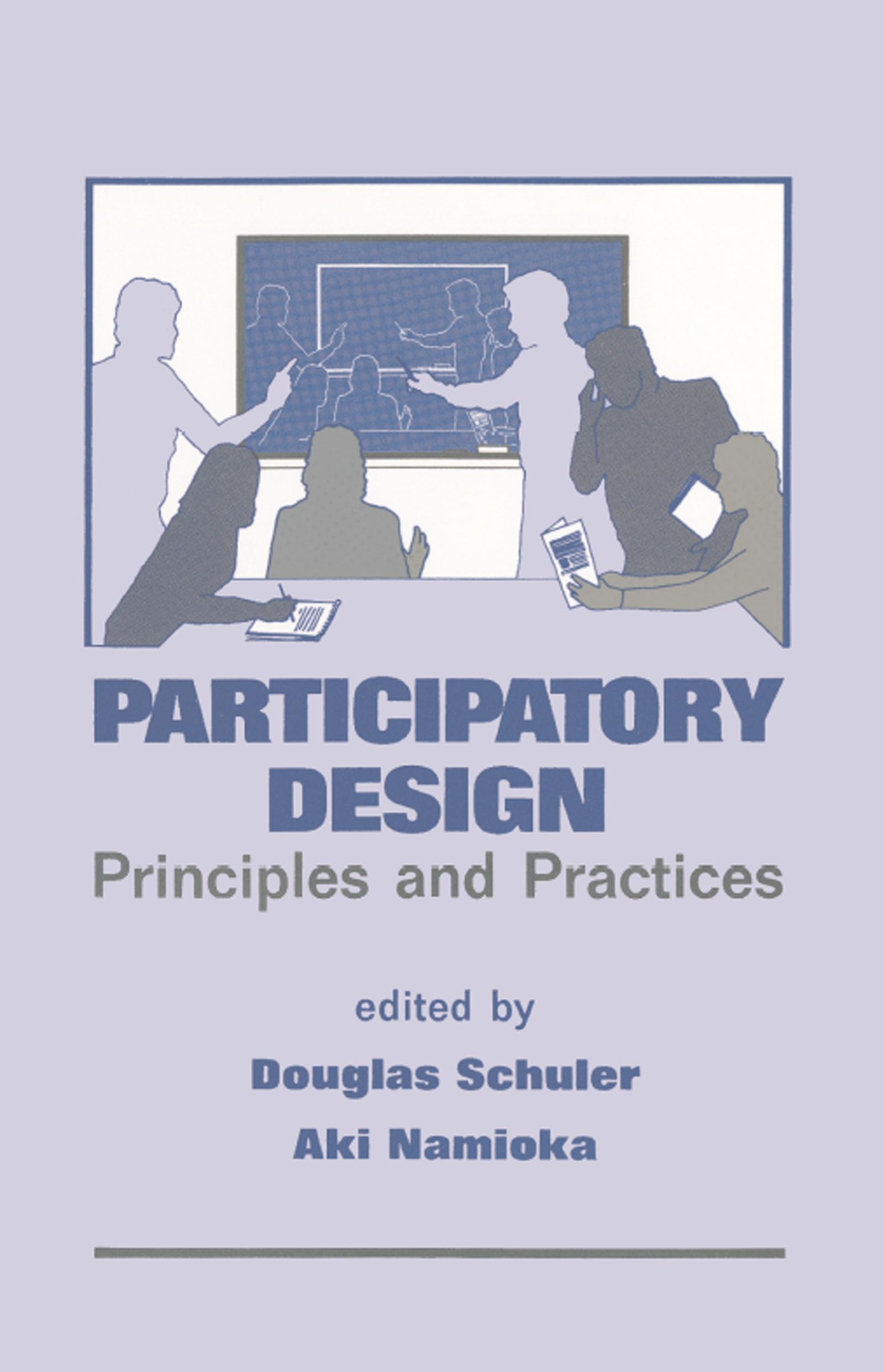
The voices in this collection are primarily those of researchers and developers concerned with bringing knowledge of technological possibilities to bear on informed and effective system design. Their efforts are distinguished from many previous writings on system development by their central and abiding reliance on direct and continuous interaction with those who are the ultimate arbiters of system adequacy; namely, those who will use the technology in their everyday lives and work. A key issue throughout is the question of who does what to whom: whose interests are at stake, who initiates action and for what reason, who defines the problem and who decides that there is one.
The papers presented follow in the footsteps of a small but growing international community of scholars and practitioners of participatory systems design. Many of the original European perspectives are represented here as well as some new and distinctively American approaches. The collection is characterized by a rich and diverse set of perspectives and experiences that, despite their differences, share a distinctive spirit and direction -- a more humane, creative, and effective relationship between those involved in technology's design and use, and between technology and the human activities that motivate the technology.
Payez facilement par carte, Klarna, Apple Pay ou Google Pay. Pas satisfait ? Vous avez toujours une garantie de remboursement de 14 jours. En savoir plus dans nos conditions. Si vous avez des questions, envoyez-nous un e-mail à hello@memmo.org.
Memmo facilite tes études, où que tu sois dans le monde. On rassemble tes manuels de cours et des outils d'étude intelligents au même endroit : résumés, quiz, podcasts et flashcards. Et il y a Ted, ton compagnon d'étude qui répond à toutes tes questions. Plus de 50 000 étudiants étudient déjà ici – conçu pour t'aider à apprendre plus vite et à moins stresser.