
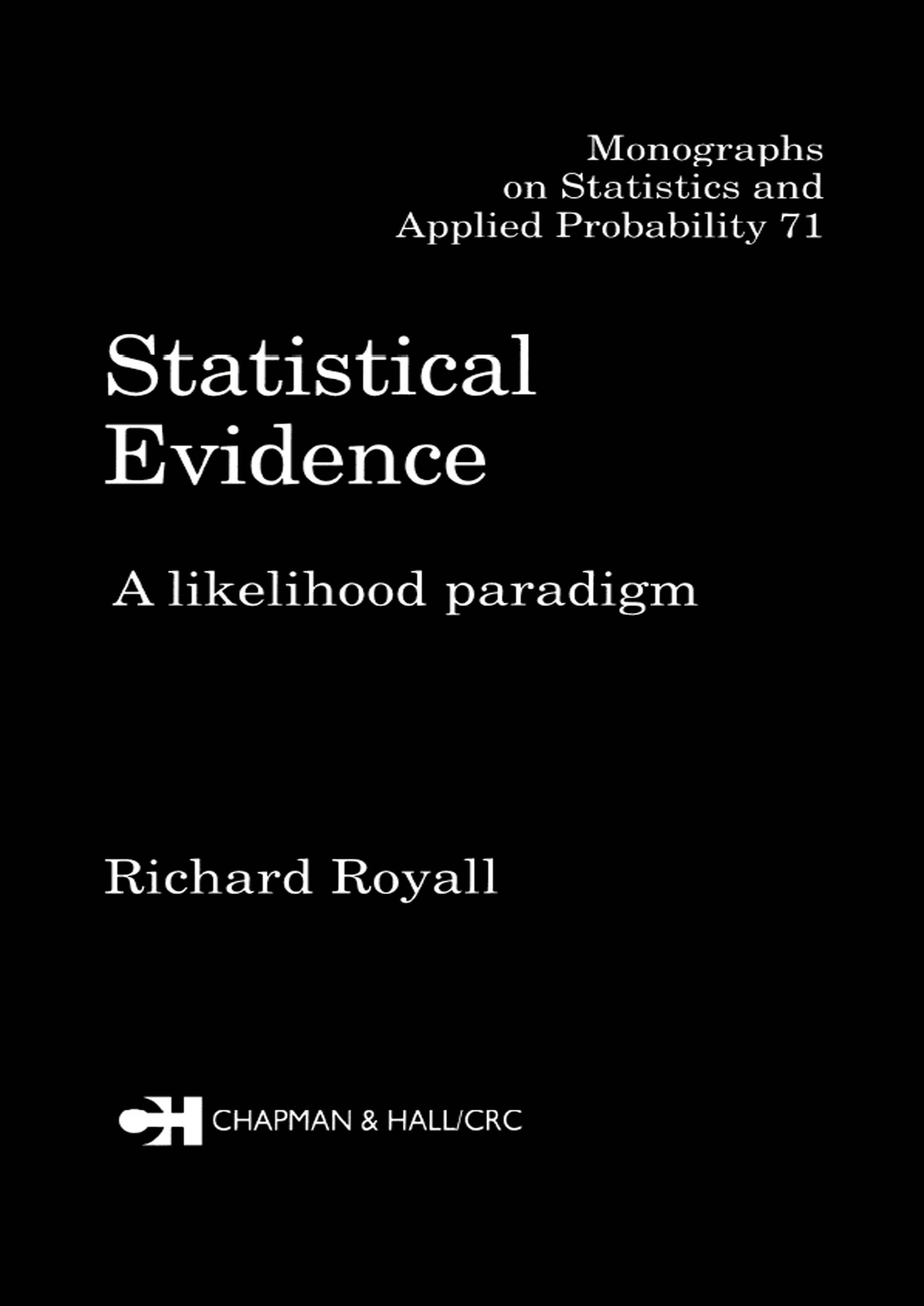
Interpreting statistical data as evidence, Statistical Evidence: A Likelihood Paradigm focuses on the law of likelihood, fundamental to solving many of the problems associated with interpreting data in this way. Statistics has long neglected this principle, resulting in a seriously defective methodology. This book redresses the balance, explaining why science has clung to a defective methodology despite its well-known defects. After examining the strengths and weaknesses of the work of Neyman and Pearson and the Fisher paradigm, the author proposes an alternative paradigm which provides, in the law of likelihood, the explicit concept of evidence missing from the other paradigms. At the same time, this new paradigm retains the elements of objective measurement and control of the frequency of misleading results, features which made the old paradigms so important to science. The likelihood paradigm leads to statistical methods that have a compelling rationale and an elegant simplicity, no longer forcing the reader to choose between frequentist and Bayesian statistics.
Payez facilement par carte, Klarna, Apple Pay ou Google Pay. Pas satisfait ? Vous avez toujours une garantie de remboursement de 14 jours. En savoir plus dans nos conditions. Si vous avez des questions, envoyez-nous un e-mail à hello@memmo.org.
Memmo facilite tes études, où que tu sois dans le monde. On rassemble tes manuels de cours et des outils d'étude intelligents au même endroit : résumés, quiz, podcasts et flashcards. Et il y a Ted, ton compagnon d'étude qui répond à toutes tes questions. Plus de 50 000 étudiants étudient déjà ici – conçu pour t'aider à apprendre plus vite et à moins stresser.
Tu pourrais aussi aimer
Acheter le livre0