
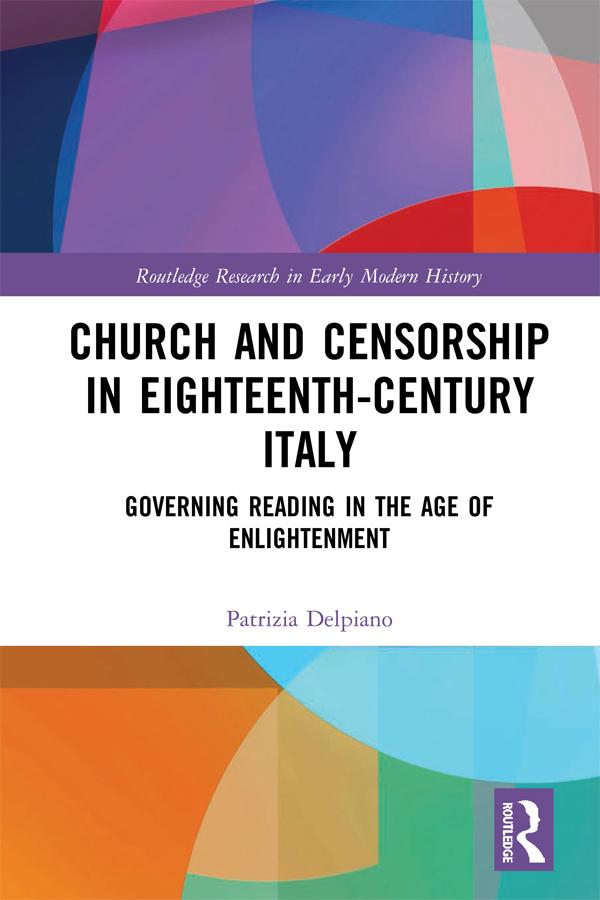
Dealing with the issue of ecclesiastical censorship and control over reading and readers, this study challenges the traditional view that during the eighteenth century the Catholic Church in Italy underwent an inexorable decline. It reconstructs the strategies used by the ecclesiastical leadership to regulate the press and culture during a century characterized by important changes, from the spread of the Enlightenment to the creation of a state censorship apparatus. Based on the archival records of the Roman Inquisition and the Congregation of the Index of Forbidden Books preserved in the Vatican, it provides a comprehensive analysis of the Catholic Church’s endeavour to keep literature and reading in check by means of censorship and the promotion of a "good" press.
The crisis of the Inquisition system did not imply a general diminution of the Church’s involvement in controlling the press. Rather than being effective instruments of repression, the Inquisition and the Index combined to create an ideological apparatus to resist new ideas and to direct public opinion. This was a network mainly inspired by Counter-Enlightenment principles which would go on to influence the Church’s action well beyond the eighteenth century.
This book is an English translation of Il governo della lettura: Chiesa e libri nell’Italia del Settecento (Bologna: Il Mulino, 2007).
Payez facilement par carte, Klarna, Apple Pay ou Google Pay. Pas satisfait ? Vous avez toujours une garantie de remboursement de 14 jours. En savoir plus dans nos conditions. Si vous avez des questions, envoyez-nous un e-mail à hello@memmo.org.
Memmo facilite tes études, où que tu sois dans le monde. On rassemble tes manuels de cours et des outils d'étude intelligents au même endroit : résumés, quiz, podcasts et flashcards. Et il y a Ted, ton compagnon d'étude qui répond à toutes tes questions. Plus de 50 000 étudiants étudient déjà ici – conçu pour t'aider à apprendre plus vite et à moins stresser.