
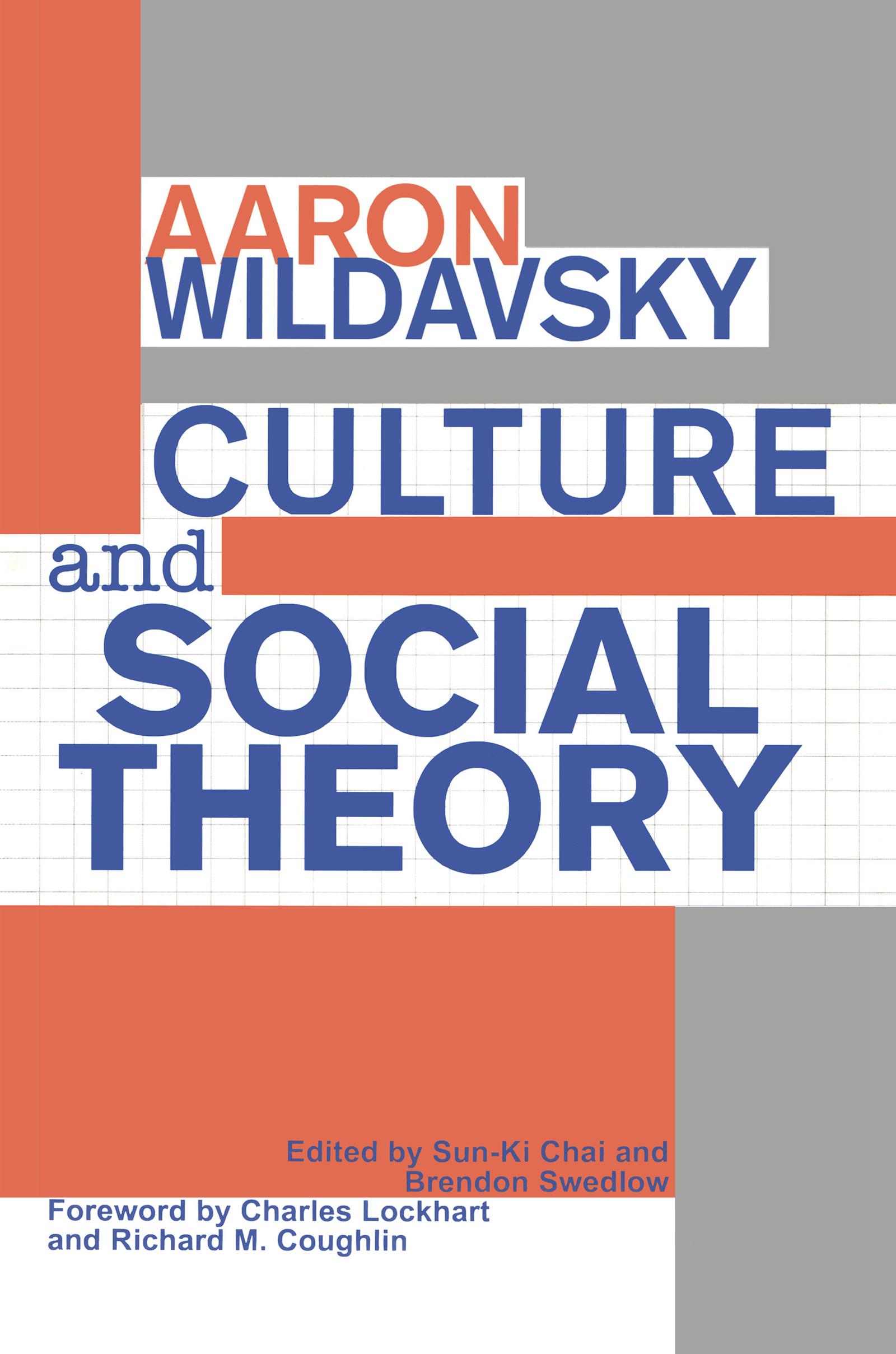
Aaron Wildavsky, along with Mary Douglas, identified what they called grid-group theory. Wildavsky began calling this "cultural theory," and applied it to an astounding array of subjects. The essays in this volume exemplify the theory's potential contributions to three seemingly disparate, but related, areas: the social construction of meaning, normative/analytic political philosophy, and a theory of rational choices. This book is the first in a series of Aaron Wildavsky's collected writings being published posthumously by Transaction. Wildavsky selected, sequenced, and grouped all but three of the essays included in Culture and Social Theory prior to his death. Some are presented here for the first time. Wildavsky's cultural theory provides ways to organize and interpret the world.
In the first section, he shows how social scientists, particularly economists and sociologists, apply the theory. Wildavsky argues that concepts such as externalities, public goods, altruism, and even risk and rape are tools of rival, ubiquitous cultures engaged in perpetual struggle with one another. The second section deals with cultural theory as a way to interpret the works of normative and analytic political philosophers, including Thomas Hobbes and John Stuart Mill, on competing human objectives. Wildavsky argues that particular types of interaction among a society's cultures are necessary for effective realization of basic concepts such as democracy. In the third section, Wildavsky applies cultural theory in conjunction with instrumental rationality, the former as a theory of preference formation, the latter as a device for realizing preferences efficiently. High-priority objectives, and thus the character of norms and rational action, shift across cultures. The world and its various elements comprise a complex, frequently changing, and thus ambiguous reality, nowhere more so than in the dynamic contours of the United States. For cultural theory, individualistic, hierarchical, and egalitarian interpretations of the world are the only ones capable of forming and sustaining institutions and related patterns of social relations that will support human social groups.
Wildavsky's central objective is to strip away the camouflage and to reveal varying domains of social life as fields of cultural competition. Culture and Social Theory will be a necessary addition to the libraries of political scientists, economists, and policymakers, not to mention all those who admire Aaron Wildavsky and his work.
Payez facilement par carte, Klarna, Apple Pay ou Google Pay. Pas satisfait ? Vous avez toujours une garantie de remboursement de 14 jours. En savoir plus dans nos conditions. Si vous avez des questions, envoyez-nous un e-mail à hello@memmo.org.
Memmo facilite tes études, où que tu sois dans le monde. On rassemble tes manuels de cours et des outils d'étude intelligents au même endroit : résumés, quiz, podcasts et flashcards. Et il y a Ted, ton compagnon d'étude qui répond à toutes tes questions. Plus de 50 000 étudiants étudient déjà ici – conçu pour t'aider à apprendre plus vite et à moins stresser.