
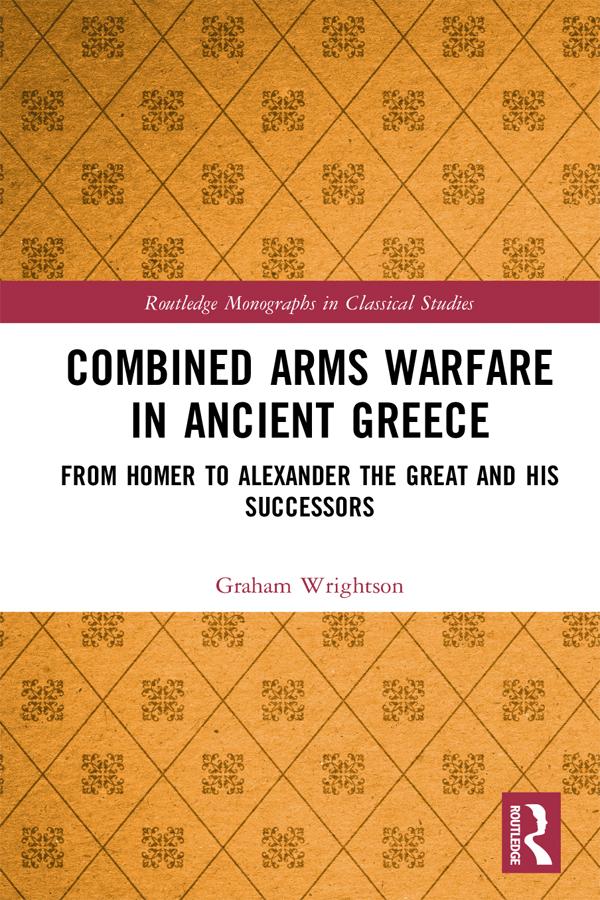
Combined Arms Warfare in Ancient Greece examines the timelines of military developments that led from the hoplite-based armies of the ancient Greeks to the hugely successful and multi-faceted armies of Philip II, Alexander the Great, and his Successors. It concentrates on the introduction and development of individual units and their tactical coordination and use in battle in what is termed "combined arms": the effective integration of different unit types into one cohesive battle plan and army allowing each unit to focus on its strengths without having to worry about its weaknesses.
This volume traces the development, and argues for the vital importance, of the use of combined arms in Greek warfare from the Archaic period onwards, especially concerning the Macedonian hegemony, through to its developmental completion in the form of fully "integrated warfare" at the battle of Ipsus in 301 BCE. It argues crucially that warfare should never be viewed in isolation in individual states, regions, conflicts or periods but taken as a collective whole tracing the mutual influence of other cultures and the successful innovations that always result.
Wrightson analyses Greek and Macedonian warfare through the lens of modern military theoretical terminology, making this study accessible to those with a general interest in military history as well as those studying this specific period.
Payez facilement par carte, Klarna, Apple Pay ou Google Pay. Pas satisfait ? Vous avez toujours une garantie de remboursement de 14 jours. En savoir plus dans nos conditions. Si vous avez des questions, envoyez-nous un e-mail à hello@memmo.org.
Memmo facilite tes études, où que tu sois dans le monde. On rassemble tes manuels de cours et des outils d'étude intelligents au même endroit : résumés, quiz, podcasts et flashcards. Et il y a Ted, ton compagnon d'étude qui répond à toutes tes questions. Plus de 50 000 étudiants étudient déjà ici – conçu pour t'aider à apprendre plus vite et à moins stresser.