
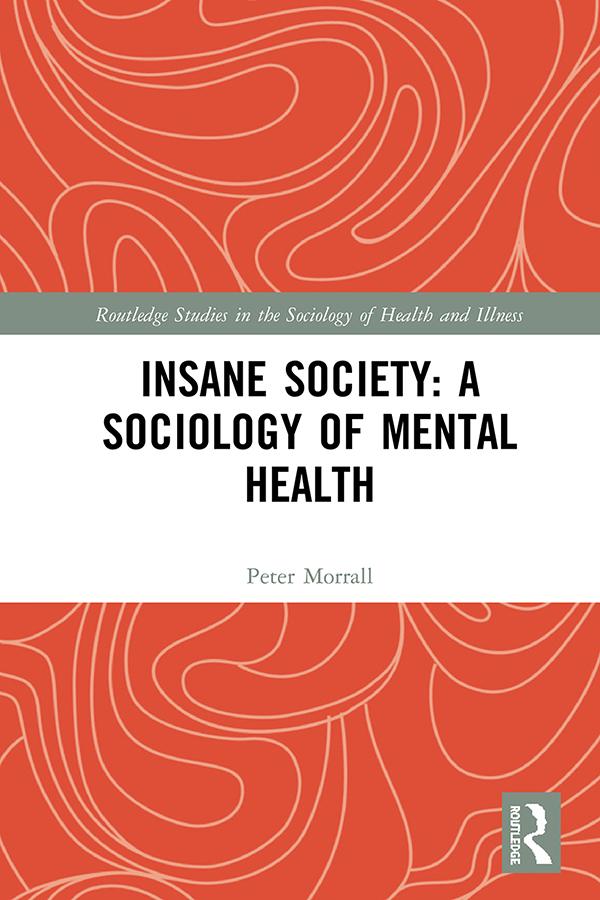
This book critiques the connection between Western society and madness, scrutinizing if and how societal insanity affects the cause, construction, and consequence of madness.
Looking beyond the affected individual to their social, political, economic, ecological, and cultural context, this book examines whether society itself, and its institutions, divisions, practices, and values, is mad. That society’s insanity is relevant to the sanity and insanity of its citizens has been argued by Fromm in The Sane Society, but also by a host of sociologists, social thinkers, epidemiologists and biologists. This book builds on classic texts such as Foucault’s History of Madness, Scull’s Marxist-oriented works and more recent publications which have arisen from a range of socio-political and patient-orientated movements. Chapters in this book draw on biology, psychology, sociological and anthropological thinking that argues that where madness is concerned, society matters.
Providing an extended case study of how the sociological imagination should operate in a contemporary setting, this book draws on genetics, neuroscience, cognitive science, radical psychology, and evolutionary psychology/psychiatry. It is an important read for students and scholars of sociology, anthropology, social policy, criminology, health, and mental health.
Payez facilement par carte, Klarna, Apple Pay ou Google Pay. Pas satisfait ? Vous avez toujours une garantie de remboursement de 14 jours. En savoir plus dans nos conditions. Si vous avez des questions, envoyez-nous un e-mail à hello@memmo.org.
Memmo facilite tes études, où que tu sois dans le monde. On rassemble tes manuels de cours et des outils d'étude intelligents au même endroit : résumés, quiz, podcasts et flashcards. Et il y a Ted, ton compagnon d'étude qui répond à toutes tes questions. Plus de 50 000 étudiants étudient déjà ici – conçu pour t'aider à apprendre plus vite et à moins stresser.