
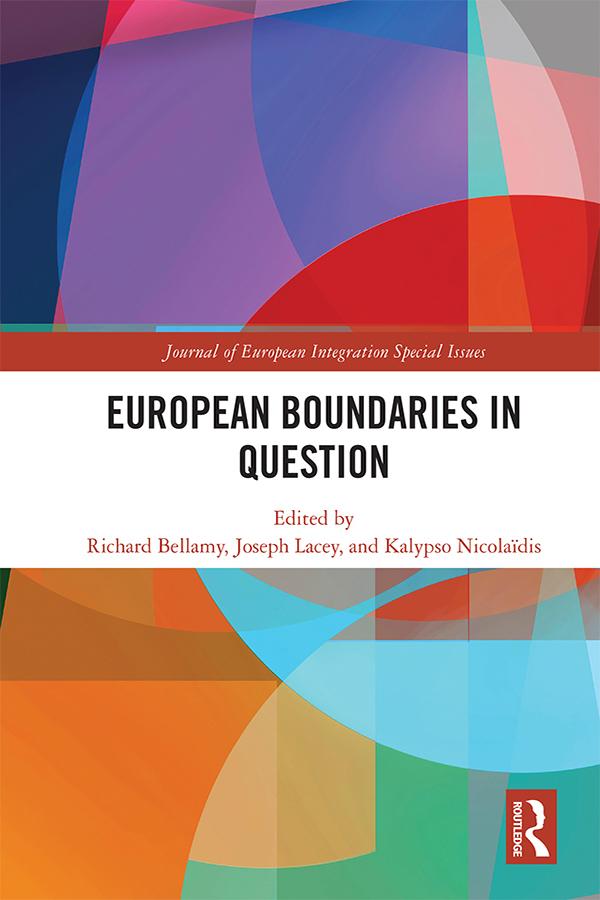
European Union boundaries have always been unusual. In no other political community is both the prospect of enlargement and the ever-present possibility of withdrawal part of the constitutional framework. We find few other instances where some territories in a political community adopt a common currency while others do not. Examples of thick association agreements, such as we find between the EU and third countries like Switzerland and Norway, are uncommon. Over the last number of years, EU boundaries have been challenged like never before. Brexit poses a fundamental threat to the EU’s territorial integrity and the rights of EU citizens to cross what have been regarded as open borders; the refugee crisis and the increase of terrorism both call into question the EU’s ability to justly and effectively manage its external borders; the rise of populism is a direct challenge to internal free movement as the demand to reassert national borders becomes formidable; while the aftermath of the euro-crisis continues to put Monetary Union in doubt. By distinguishing between three categories of boundary change – boundary-making, boundary-crossing and boundary-unbundling – the authors in this volume attempt to shed light on the sustainability and legitimacy of Europe’s boundaries in question. The chapters originally published as a special issue in the Journal of European Integration.
Payez facilement par carte, Klarna, Apple Pay ou Google Pay. Pas satisfait ? Vous avez toujours une garantie de remboursement de 14 jours. En savoir plus dans nos conditions. Si vous avez des questions, envoyez-nous un e-mail à hello@memmo.org.
Memmo facilite tes études, où que tu sois dans le monde. On rassemble tes manuels de cours et des outils d'étude intelligents au même endroit : résumés, quiz, podcasts et flashcards. Et il y a Ted, ton compagnon d'étude qui répond à toutes tes questions. Plus de 50 000 étudiants étudient déjà ici – conçu pour t'aider à apprendre plus vite et à moins stresser.