
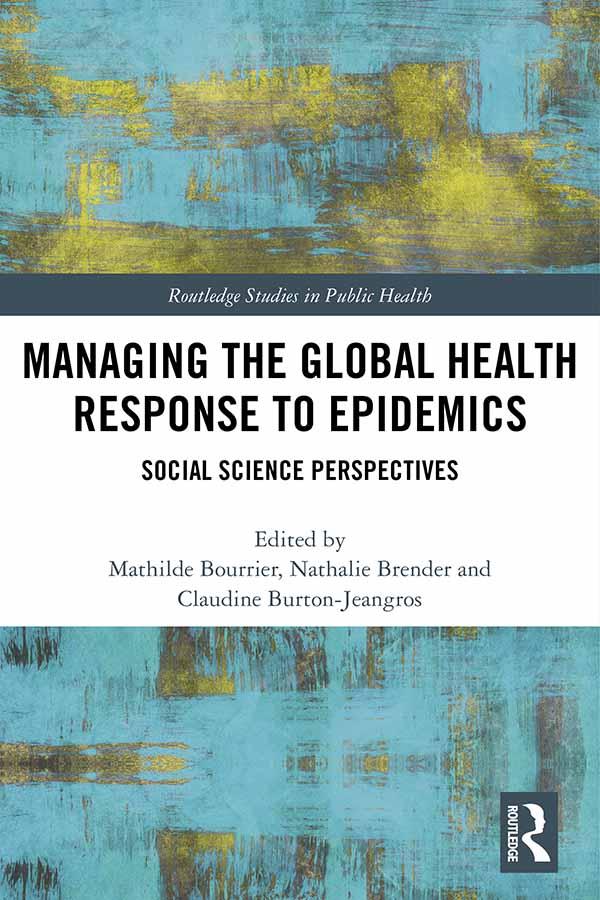
Recent epidemics have prompted large-scale international interventions, aimed at mitigating the spread of disease in a globalized world. During a crisis, however, global health actions including planning and organizing, communicating about risk, and cost benefit evaluations aren’t usually part of a single, integrated global response. Arguing that an uncoordinated approach can be challenged by local conditions and expectations, generating a wide range of resistance and difficulties, this volume provides important insights for future outbreak management and global health governance.
Drawing on experiences with A(H1N1) and Ebola virus disease, the book is divided into three parts looking at how responses to global health crises have developed, lessons learned from particular pandemics and the ethical implications of our management of them. Individual chapters focus on, among other issues, financing, cost–benefit analysis, matrix management, risk communication and organizational strategies.
Taking a social science perspective, this valuable book outlines the current state of global health emergency responses and explores ways in which they can be improved. It is a useful read for academics and practitioners interested in global health, the sociology of health and illness, health economics and emergency management.
Payez facilement par carte, Klarna, Apple Pay ou Google Pay. Pas satisfait ? Vous avez toujours une garantie de remboursement de 14 jours. En savoir plus dans nos conditions. Si vous avez des questions, envoyez-nous un e-mail à hello@memmo.org.
Memmo facilite tes études, où que tu sois dans le monde. On rassemble tes manuels de cours et des outils d'étude intelligents au même endroit : résumés, quiz, podcasts et flashcards. Et il y a Ted, ton compagnon d'étude qui répond à toutes tes questions. Plus de 50 000 étudiants étudient déjà ici – conçu pour t'aider à apprendre plus vite et à moins stresser.