
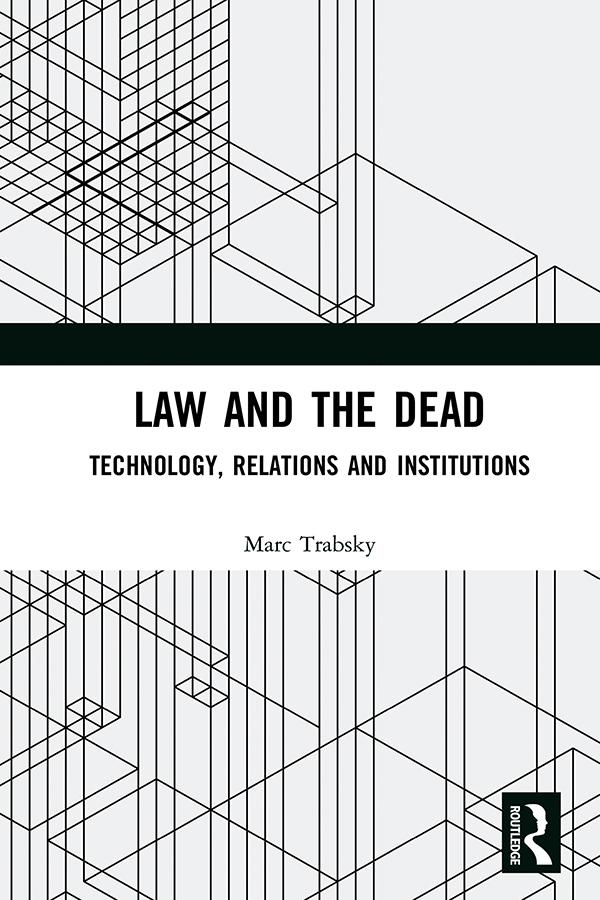
The governance of the dead in the eighteenth and nineteenth centuries gave rise to a new arrangement of thanato-politics in the West. Legal, medical and bureaucratic institutions developed innovative technologies for managing the dead, maximising their efficacy and exploiting their vitality. Law and the Dead writes a history of their institutional life in the nineteenth and twentieth centuries.
With a particular focus on the technologies of the death investigation process, including place-making, the forensic gaze, bureaucratic manuals, record-keeping and radiography, this book examines how the dead came to be incorporated into legal institutions in the modern era. Drawing on the writings of philosophers, historians and legal theorists, it offers tools for thinking through how the dead dwell in law, how their lives persist through the conduct of office, and how coroners assume responsibility for taking care of the dead.
This historical and interdisciplinary book offers a provocative challenge to conventional thinking about the sequestration of the dead in the nineteenth and twentieth centuries. It asks the reader to think through and with legal institutions when writing a history of the dead, and to trace the important role assumed by coroners in the governance of the dead. This book will be of interest to scholars working in law, history, sociology and criminology.
Payez facilement par carte, Klarna, Apple Pay ou Google Pay. Pas satisfait ? Vous avez toujours une garantie de remboursement de 14 jours. En savoir plus dans nos conditions. Si vous avez des questions, envoyez-nous un e-mail à hello@memmo.org.
Memmo facilite tes études, où que tu sois dans le monde. On rassemble tes manuels de cours et des outils d'étude intelligents au même endroit : résumés, quiz, podcasts et flashcards. Et il y a Ted, ton compagnon d'étude qui répond à toutes tes questions. Plus de 50 000 étudiants étudient déjà ici – conçu pour t'aider à apprendre plus vite et à moins stresser.