
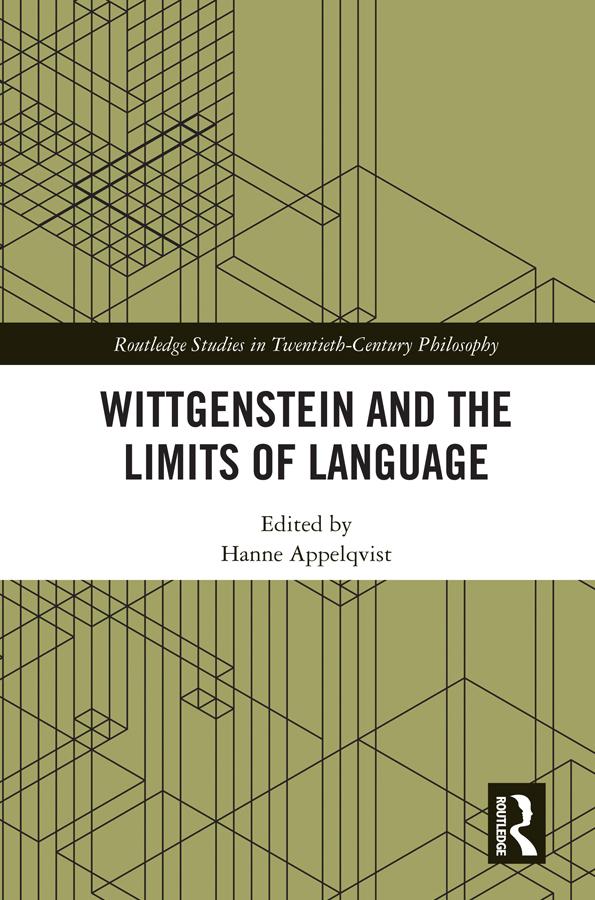
The limit of language is one of the most pervasive notions found in Wittgenstein’s work, both in his early Tractatus Logico-Philosophicus and his later writings. Moreover, the idea of a limit of language is intimately related to important scholarly debates on Wittgenstein’s philosophy, such as the debate between the so-called traditional and resolute interpretations, Wittgenstein’s stance on transcendental idealism, and the philosophical import of Wittgenstein’s latest work On Certainty.
This collection includes thirteen original essays that provide a comprehensive overview of the various ways in which Wittgenstein appeals to the limit of language at different stages of his philosophical development. The essays connect the idea of a limit of language to the most important themes discussed by Wittgenstein—his conception of logic and grammar, the method of philosophy, the nature of the subject, and the foundations of knowledge—as well as his views on ethics, aesthetics, and religion. The essays also relate Wittgenstein’s thought to his contemporaries, including Carnap, Frege, Heidegger, Levinas, and Moore.
Payez facilement par carte, Klarna, Apple Pay ou Google Pay. Pas satisfait ? Vous avez toujours une garantie de remboursement de 14 jours. En savoir plus dans nos conditions. Si vous avez des questions, envoyez-nous un e-mail à hello@memmo.org.
Memmo facilite tes études, où que tu sois dans le monde. On rassemble tes manuels de cours et des outils d'étude intelligents au même endroit : résumés, quiz, podcasts et flashcards. Et il y a Ted, ton compagnon d'étude qui répond à toutes tes questions. Plus de 50 000 étudiants étudient déjà ici – conçu pour t'aider à apprendre plus vite et à moins stresser.